Journal
A Brief Performance History of Bach's Goldberg Variations
[caption id="attachment_764" align="alignleft" width="180" caption="Simone Dinnerstein - JS Bach Goldberg Variations"]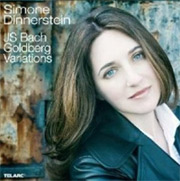 [/caption]
The standard account of Johann Sebastian Bach's composition of his famous 'Goldberg Variations' comes from a biography of Bach, by Johann Nikolaus Forkel, which first appeared in 1802. Forkel says that Bach wrote these works as an insomnia cure for a patron, Count Keyserlingk. Specifically, he wrote them for the performances of a former student of his, Johann Gottlieb Goldberg, in the Count’s employment.
They seem to have worked! Goldberg would play them in the evening, the Count would drift off happily to sleep, and – in recognition of this success – the Count gave Bach a golden goblet filled with 100 gold coins.
Anna Harwell Celenza has even made a children’s book out of this touching incident.
Some historians have sought to throw cold water over this story. They note, for example that the music isn’t even remotely lullaby-like, and that the title page of the work, which Bach called simply “Aria with Divers Variations,” contains no dedication. If Bach had written it with a specific patron in mind, the custom of the time would have suggested some flowery dedicatory words about the munificence of the Count.
Anyway, it is a lovely story, and the simple fact is that the works we know by Goldberg’s name were first published in 1741, though they only slowly attained the status as Classics that they possess now.
[/caption]
The standard account of Johann Sebastian Bach's composition of his famous 'Goldberg Variations' comes from a biography of Bach, by Johann Nikolaus Forkel, which first appeared in 1802. Forkel says that Bach wrote these works as an insomnia cure for a patron, Count Keyserlingk. Specifically, he wrote them for the performances of a former student of his, Johann Gottlieb Goldberg, in the Count’s employment.
They seem to have worked! Goldberg would play them in the evening, the Count would drift off happily to sleep, and – in recognition of this success – the Count gave Bach a golden goblet filled with 100 gold coins.
Anna Harwell Celenza has even made a children’s book out of this touching incident.
Some historians have sought to throw cold water over this story. They note, for example that the music isn’t even remotely lullaby-like, and that the title page of the work, which Bach called simply “Aria with Divers Variations,” contains no dedication. If Bach had written it with a specific patron in mind, the custom of the time would have suggested some flowery dedicatory words about the munificence of the Count.
Anyway, it is a lovely story, and the simple fact is that the works we know by Goldberg’s name were first published in 1741, though they only slowly attained the status as Classics that they possess now.
 [/caption]
The Goldberg variations were not often played in the early decades of the 19th century, though. They may have seemed old-fashioned to the musicians of the time, whereas other aspects of Bach’s oeuvre had more continuing appeal to the romantics.
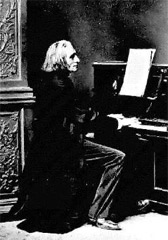
There were exceptions to the general rule of neglect. Notably, in 1838-48, Franz Liszt went on tour, and among the music he played were his favorites of Bach, the Goldberg variations among them. These tours may have kept up interest in them.
[/caption]
The Goldberg variations were not often played in the early decades of the 19th century, though. They may have seemed old-fashioned to the musicians of the time, whereas other aspects of Bach’s oeuvre had more continuing appeal to the romantics.
There were exceptions to the general rule of neglect. Notably, in 1838-48, Franz Liszt went on tour, and among the music he played were his favorites of Bach, the Goldberg variations among them. These tours may have kept up interest in them.
 [/caption]
Gould revisited this material in 1981, (by which time his 1955 album had sold 100,000 copies), when he recorded a new version. The two recordings show the width of interpretive freedom the material Variationsallow.
Gould was unhappy with the tempo he had kept through the first album, and in the second he slows things down considerably. The 1955 album is just 33 minutes and 34 seconds long. The 1981 album is 51 minutes, 18 seconds. (Still, there are some who like it slower than that. Another Canadian classicist, Angela Hewitt, in 1999 recorded it at 78 minutes, 32 seconds.)
Gould was especially unhappy with his original take on the 25th variation. He said he had made it sound “like a Chopin nocturne” – which perhaps doesn’t sound like a devastating critique to you or me, but obviously did to Gould! Gould had a long list of distinguished composers of whom he had a low opinion – Chopin was on it.
At least one critic, Colin Fleming, has noted that Gould’s 1981 take on that 25th variation accomplished the goal of taking the Chopin out of the piece. But the result doesn’t really sound like a Bach variation either. Gould’s second version of that variation ends up, Fleming says, as “something purely autonomous, amorphous and still distinct, conjuring a feeling of impenetrable isolation.”
Gustav Leonhardt, a Dutch harpsichordist, has recorded the Goldberg Variations three times in the course of his illustrious career. The first of his recordings precedes the first of Gould’s. The latest was a 2004 CD brought out by DHM.
[/caption]
Gould revisited this material in 1981, (by which time his 1955 album had sold 100,000 copies), when he recorded a new version. The two recordings show the width of interpretive freedom the material Variationsallow.
Gould was unhappy with the tempo he had kept through the first album, and in the second he slows things down considerably. The 1955 album is just 33 minutes and 34 seconds long. The 1981 album is 51 minutes, 18 seconds. (Still, there are some who like it slower than that. Another Canadian classicist, Angela Hewitt, in 1999 recorded it at 78 minutes, 32 seconds.)
Gould was especially unhappy with his original take on the 25th variation. He said he had made it sound “like a Chopin nocturne” – which perhaps doesn’t sound like a devastating critique to you or me, but obviously did to Gould! Gould had a long list of distinguished composers of whom he had a low opinion – Chopin was on it.
At least one critic, Colin Fleming, has noted that Gould’s 1981 take on that 25th variation accomplished the goal of taking the Chopin out of the piece. But the result doesn’t really sound like a Bach variation either. Gould’s second version of that variation ends up, Fleming says, as “something purely autonomous, amorphous and still distinct, conjuring a feeling of impenetrable isolation.”
Gustav Leonhardt, a Dutch harpsichordist, has recorded the Goldberg Variations three times in the course of his illustrious career. The first of his recordings precedes the first of Gould’s. The latest was a 2004 CD brought out by DHM.
[/caption]
The standard account of Johann Sebastian Bach's composition of his famous 'Goldberg Variations' comes from a biography of Bach, by Johann Nikolaus Forkel, which first appeared in 1802. Forkel says that Bach wrote these works as an insomnia cure for a patron, Count Keyserlingk. Specifically, he wrote them for the performances of a former student of his, Johann Gottlieb Goldberg, in the Count’s employment.
They seem to have worked! Goldberg would play them in the evening, the Count would drift off happily to sleep, and – in recognition of this success – the Count gave Bach a golden goblet filled with 100 gold coins.
Anna Harwell Celenza has even made a children’s book out of this touching incident.
Some historians have sought to throw cold water over this story. They note, for example that the music isn’t even remotely lullaby-like, and that the title page of the work, which Bach called simply “Aria with Divers Variations,” contains no dedication. If Bach had written it with a specific patron in mind, the custom of the time would have suggested some flowery dedicatory words about the munificence of the Count.
Anyway, it is a lovely story, and the simple fact is that the works we know by Goldberg’s name were first published in 1741, though they only slowly attained the status as Classics that they possess now.
Bach Outside of Church
For a quick take on this historical context, consider what Mehmet Okonsar, a Turkish-Belgian pianist, is trying to tell us here. He explains why the Variations constituted a “revolutionary instrumental accomplishment,” and why we should resist the temptation to see all of Bach through the lens of his church-commissioned works: we shouldn’t work to find a religious sensibility in his “profane and purely instrumental works.” Relax, and let yourself be entertained. [caption id="attachment_765" align="alignright" width="168" caption="Franz Liszt"][/caption]
The Goldberg variations were not often played in the early decades of the 19th century, though. They may have seemed old-fashioned to the musicians of the time, whereas other aspects of Bach’s oeuvre had more continuing appeal to the romantics.
There were exceptions to the general rule of neglect. Notably, in 1838-48, Franz Liszt went on tour, and among the music he played were his favorites of Bach, the Goldberg variations among them. These tours may have kept up interest in them.
Glenn Gould
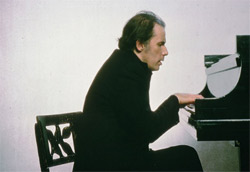
But let us skip forward a bit from there and get to the moment when, in 1955, the Canadian classical pianist Glenn Gould made the Goldberg Variations the content of his debut album. One intriguing coincidence here – Gould, like Count Keyserlingk before him, suffered from insomnia. [caption id="attachment_767" align="alignleft" width="250" caption="Glenn Gould"][/caption]
Gould revisited this material in 1981, (by which time his 1955 album had sold 100,000 copies), when he recorded a new version. The two recordings show the width of interpretive freedom the material Variationsallow.
Gould was unhappy with the tempo he had kept through the first album, and in the second he slows things down considerably. The 1955 album is just 33 minutes and 34 seconds long. The 1981 album is 51 minutes, 18 seconds. (Still, there are some who like it slower than that. Another Canadian classicist, Angela Hewitt, in 1999 recorded it at 78 minutes, 32 seconds.)
Gould was especially unhappy with his original take on the 25th variation. He said he had made it sound “like a Chopin nocturne” – which perhaps doesn’t sound like a devastating critique to you or me, but obviously did to Gould! Gould had a long list of distinguished composers of whom he had a low opinion – Chopin was on it.
At least one critic, Colin Fleming, has noted that Gould’s 1981 take on that 25th variation accomplished the goal of taking the Chopin out of the piece. But the result doesn’t really sound like a Bach variation either. Gould’s second version of that variation ends up, Fleming says, as “something purely autonomous, amorphous and still distinct, conjuring a feeling of impenetrable isolation.”
Gustav Leonhardt, a Dutch harpsichordist, has recorded the Goldberg Variations three times in the course of his illustrious career. The first of his recordings precedes the first of Gould’s. The latest was a 2004 CD brought out by DHM.