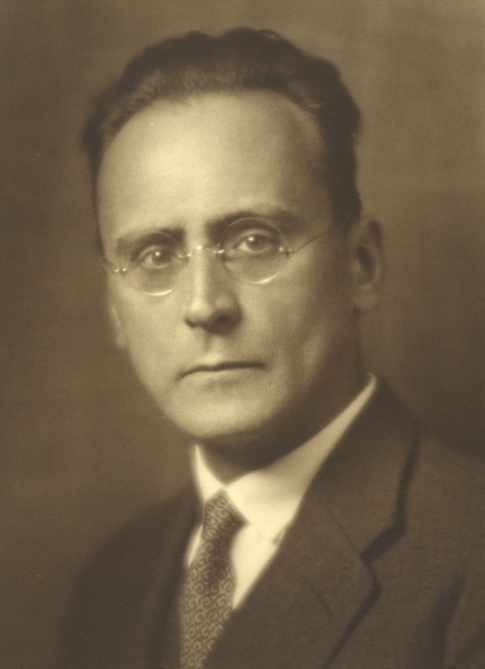
Composer
Anton Webern
Austrian composer and conductor
1883–1945
40 works in the index
- Born
- 1883
- Died
- 1945
- Birthplace
- Vienna
- Citizenship / historical state
- Austria
- Period (estimated from birth year)
- Modern
Biography
Webern, an Austrian composer and conductor of what is known as the Second Viennese School, attended Vienna University beginning in 1902 and studied musicology with Guido Adler. He also there became acquainted with Arnold Schoenberg and the circle of Schoenberg’s disciples. Webern’s first notable composition was his Passacaglia Op. 2, followed by an Op. 2. He was already fighting at this time for twelve-tone music. Thereafter he continued to compose even while taking inferior positions as a conductor and coping with what he considered the poor repertories, boorish managers, and philistine public that involved. Each successive year the Schoenberg circle, of which Webern was now an important part, advanced, though Webern’s music was denounced by the rising Nazi movement as “cultural Bolshevism” and “degenerate art.” Soon after the end of the war, on September 15, 1945, during the Allied occupation of Austria, Webern was shot and killed by a U.S. soldier when he stepped outside for a smoke.
In this catalogue
- Common listed instruments
- Voice, Clarinet, violin, Choir, Orchestra
- Genres represented
- Classical
- Works with composition dates
- 23 of 40
These details describe the indexed sheet music, including arrangements.
Catalogue
Works
Years are composition dates where known. Instruments describe editions in our catalogue and may include arrangements. A dash means the detail is not recorded.
| Work | Year composed | Catalogue / opus | Key in title | Listed instruments | Genre | Editions |
|---|---|---|---|---|---|---|
| Concerto, Op.24 | — | Op.24 | — | Piano, Oboe, violin, Horn, Clarinet, Trombone, Trumpet | Classical | 6 |
| Six Pieces for Large Orchestra, Op.6 | 1909IMSLP | Op.6 | — | Orchestra | Classical | 5 |
| Variationen für Orchester, Op.30 | 1940IMSLP | Op.30 | — | Orchestra | Classical | 5 |
| 5 Canons, Op.16 | 1923-24IMSLP | Op.16 | — | — | Classical | 4 |
| 2 Lieder, Op.19 | 1925-26IMSLP | Op.19 | — | Clarinet, Celesta | Classical | 4 |
| Symphony, Op.21 | 1928IMSLP | Op.21 | — | — | Classical | 4 |
| 3 Volkstexte, Op.17 | 1924-25IMSLP | Op.17 | — | violin | Classical | 4 |
| Entflieht auf leichten Kähnen, Op.2 | 1908IMSLP | Op.2 | — | — | Classical | 3 |
| 5 Lieder aus Der siebente Ring | 1908-09IMSLP | — | — | voice piano | Classical | 3 |
| 4 Lieder für Singstimme und Klavier, Op.12 | 1915-1917IMSLP | Op.12 | — | Voice | Classical | 3 |
| Passacaglia für Orchester, Op.1 | — | Op.1 | — | — | Classical | 3 |
| 4 Stücke für Geige und Klavier, Op. 7 | 1910, rev.1914IMSLP | Op. 7 | — | — | Classical | 3 |
| String Quartet, op. post. | 1936-38IMSLP | — | — | String Quartet | Classical | 3 |
| 5 geistliche Lieder, Op.15 | 1917-22IMSLP | Op.15 | — | Flute, Clarinet, Trumpet | Classical | 2 |
| Kinderstück | 1924IMSLP | — | — | — | Classical | 2 |
| 3 kleine Stücke, Op.11 | 1914IMSLP | Op.11 | — | — | Classical | 2 |
| 3 Lieder für Sopran, Klarinette und Gitarre, Op.18 | 1925IMSLP | Op.18 | — | — | Classical | 2 |
| 5 Lieder nach Gedichten von Stefan George, Op.4 | — | Op.4 | — | Voice | Classical | 2 |
| Five Movements Op.5 | 1909 (Str 4tet) ; 1928-29 (Str Orch)IMSLP | Op.5 | — | — | Classical | 2 |
| Five Pieces for Orchestra, Op.10 | 1913IMSLP | Op.10 | — | Orchestra | Classical | 2 |
| Quartet, Op.22 | 1928-30IMSLP | Op.22 | — | violin, Clarinet | Classical | 2 |
| String Trio, Op.20 | 1926-27IMSLP | Op.20 | — | violin | Classical | 2 |
| Variations for Piano, Op.27 | 1935 October-1936 SeptemberIMSLP | Op.27 | — | Piano | Classical | 2 |
| Heiter | — | — | — | Choir | Classical | 1 |
| 4 Lieder für Sopran und Kammerorchester, Op.13 | 1914-18IMSLP | Op.13 | — | — | Classical | 1 |
| 6 Lieder nach Gedichten von Georg Trakl, Op.14 | 1917-22IMSLP | Op.14 | — | Clarinet | Classical | 1 |
| 2 Lieder nach Gedichten von Rainer Maria Rilke | 1910, revised 1925, 1926IMSLP | — | — | Harp, violin, Horn, Clarinet, Trumpet, Celesta | Classical | 1 |
| String Quartet, Op.28 | — | Op.28 | — | — | — | — |
| Tief von fern | — | — | — | Choir | Classical | — |
| Der Tod | — | — | — | Choir | Classical | — |
| Sommerabend | — | — | — | Choir | Classical | — |
| Freunde | — | — | — | Voice | Classical | — |
| Gebet | — | — | — | Voice | Classical | — |
| Gefunden | — | — | — | Voice | Classical | — |
| 5 Songs from Der siebente Ring, Op. 3 - 1. Dies ist ein Lied fur dich allein | — | Op. 3 | — | Voice | — | 1 |
| 5 Songs from Der siebente Ring, Op. 3 - 2. Im Windesweben | — | Op. 3 | — | Voice | — | 1 |
| 5 Songs from Der siebente Ring, Op. 3 - 3. An Bachesranft | — | Op. 3 | — | Voice | — | 1 |
| 5 Songs from Der siebente Ring, Op. 3 - 4. Im Morgentaun | — | Op. 3 | — | Voice | — | 1 |
| 5 Songs from Der siebente Ring, Op. 3 - 5. Kahl reckt der Baum | — | Op. 3 | — | Voice | — | 1 |
| Passacaglia, Op. 1 | — | Op. 1 | — | Cello | — | 6 |
Biographical record: Wikidata, matched on name and checked against dates held in the catalogue. The period label is an estimate from birth year. Authority record: VIAF 22329168. Portrait: Georg Fayer, Public domain, via Wikimedia Commons.