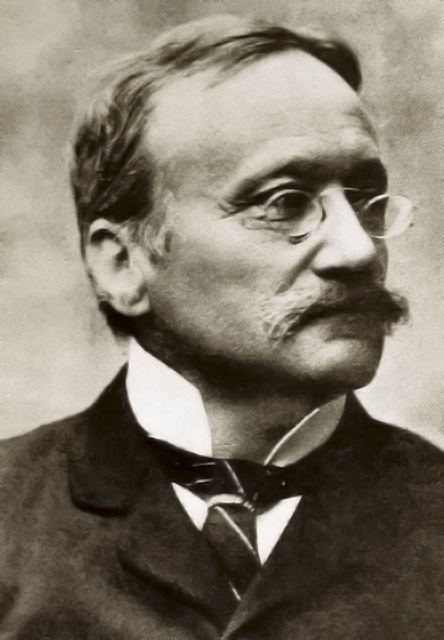
Composer
Arrigo Boito
Italian poet and opera composer and librettist of Verdi's opera ''Otello'' (1842-1918)
1842–1918
11 works in the index
- Born
- 1842
- Died
- 1918
- Birthplace
- Padua
- Place of death
- Milan
- Citizenship / historical state
- Kingdom of Italy
- Period (estimated from birth year)
- Romantic
Biography
Arrigo Boito (Italian: [arˈriːɡo ˈbɔito]; born Enrico Giuseppe Giovanni Boito; 24 February 1842 – 10 June 1918) was an Italian librettist, composer, poet and critic whose only completed opera was Mefistofele. Among the operas for which he wrote the libretti are Giuseppe Verdi's monumental last two operas Otello and Falstaff as well as Amilcare Ponchielli's La Gioconda.
Along with Emilio Praga and his brother Camillo Boito, he is regarded as one of the prominent representatives of the Scapigliatura (Italian bohemian) artistic movement. He wrote essays under the anagrammatic pseudonym of Tobia Gorrio.
Biography excerpt from Wikipedia contributors, available under CC BY-SA 4.0. Formatting and reference markers have been removed; the introduction may be shortened. View contributors and article history.
Life and musical career
- Occupations
- librettist; composer; poet; journalist; screenwriter; politician; writer; musician
- Education
- Milan Conservatory
- Recorded memberships
- Académie des beaux-arts
- Genres
- opera; classical music
- Movements
- Scapigliatura
- Notable works
- Nerone; Mefistofele
- Pseudonym
- Tobia Gorrio; Almaviva
- Languages used
- Italian
- VIAF ID
- 9843477; 222176940; 282653585
- ISNI
- 0000000108683967; 0000000368680113
- GND ID
- 118513028
- Library of Congress ID
- n80010162
- MusicBrainz ID
- 344d0eae-3b48-4da7-8c56-af771c4f6c1e
Recorded in Wikidata. Affiliations may refer to earlier stages of the composer's career.
In this catalogue
- Common listed instruments
- Voice, Piano
- Genres represented
- Classical
- Works with composition dates
- 0 of 11
These details describe the indexed sheet music, including arrangements.
Catalogue
Works
Years are composition dates where known. Instruments describe editions in our catalogue and may include arrangements. A dash means the detail is not recorded.
| Work | Year composed | Catalogue / opus | Key in title | Listed instruments | Genre | Editions |
|---|---|---|---|---|---|---|
| Son lo spirito che nega from MEFISTOFELE | — | — | — | Piano, Voice | Classical | 9 |
| Giunto Sul Passo Estremo | — | — | — | Piano, Voice | Classical | 7 |
| L'altra notte in fondo al mare from MEFISTOFELE | — | — | — | Voice | Classical | 7 |
| Mefistofele | — | — | — | — | Classical | 2 |
| Mefistofele, "Dai campi" | — | — | — | Piano, Voice | — | 1 |
| Nerone, Invan mi danni, | — | — | — | Piano, Voice | — | 1 |
| Mefistofele, L'altra notte in fondo al mare, | — | — | — | Piano, Voice | — | 1 |
| L'altra Notte In Fondo | — | — | — | Piano, Voice | Classical | — |
| Ecco il mondo from MEFISTOFELE | — | — | — | Piano, Voice | Classical | — |
| Dai campi, dai prati from MEFISTOFELE | — | — | — | Voice | Classical | 1 |
| Ballata del mondo | — | — | — | Voice | Classical | — |
Biographical record: Wikidata, matched on name and checked against dates held in the catalogue. The period label is an estimate from birth year. Authority record: VIAF 282653585. Portrait: Unknown author, Public domain, via Wikimedia Commons.