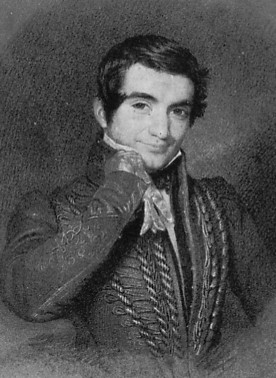
Composer
Cesare Pugni
Italian composer (1802–1870)
1802–1870
8 works and musical collections
- Born
- 1802
- Died
- 1870
- Birthplace
- Genoa
- Place of death
- Saint Petersburg
- Citizenship / historical state
- Kingdom of Italy
- Period (estimated from birth year)
- Romantic
Biography
Cesare Pugni (Italian pronunciation: [ˈtʃeːzare ˈpuɲɲi, ˈtʃɛː-]; Russian: Цезарь Пуни, romanized: Cezar' Puni; 31 May 1802, in Genoa – 26 January [O.S. 14 January] 1870) was an Italian composer of ballet music, a pianist and a violinist. He studied composition with Bonifazio Asioli and violin with Alessandro Rolla. In his early career he composed operas, symphonies, and various other forms of orchestral music. Pugni is most noted for the ballets he composed for Her Majesty's Theatre in London (1843–1850), and for the Imperial Theatres in St. Petersburg, Russia (1850–1870). The majority of his ballet music was composed for the works of the ballet master Jules Perrot, who mounted nearly every one of his ballets to scores by Pugni. In 1850 Perrot departed London for Russia, having accepted the position of Premier maître de ballet of the St. Petersburg Imperial Theatres at the behest of Carlotta Grisi, who was engaged as Prima ballerina. Cesare Pugni followed Perrot and Grisi to Russia, and remained in the imperial capital even after Grisi's departure in 1853 and Perrot's departure in 1858. Pugni went on to compose for Perrot's successors Arthur Saint-Léon and Marius Petipa, serving as the Imperial Theatre's official composer of ballet music until his death in 1870.
Cesare Pugni was renowned for the speed with which wrote, often composing the music for a multi-act Grand ballet in just a few days. Pugni was perhaps the most prolific composers of ballet music, having composed over 100 known original scores for the ballet and adapting or supplementing many other works. He composed myriad incidental dances such as divertissements and variations, many of which were added to countless other works.
Of Pugni's original scores for the ballet, he is best known today for Ondine, ou La Naïade, (also known as La Naïade et le pêcheur) (1843); La Esmeralda (1844); Catarina, ou La Fille du Bandit (1846); The Pharaoh's Daughter (1862); and The Little Humpbacked Horse (1864). Of his incidental dances, etc., he is most noted for the Pas de Six from La Vivandière (also known as Markitenka) (1844); the Pas de Quatre (1845); La Carnival de Venise pas de deux (1859); the Diane and Actéon Pas de Deux (1868); and his additional music for the ballet Le Corsaire (1863 and 1868).
In his private life, Cesare Pugni was considered a kind and ebullient man, with a passion for gambling and wine. From his two marriages, Pugni was the father of some 15 children, many of whom had large families of their own. Today there are hundreds of Russians descended from the Italian composer. Among his grandchildren was the artist Ivan Puni, and the dancer and pedagogue Alexander Shiryaev, who also created the earliest known stop motion films and was the first to film ballet dancers
Biography excerpt from Wikipedia contributors, available under CC BY-SA 4.0. Formatting and reference markers have been removed; the introduction may be shortened. View contributors and article history.
Life and musical career
- Occupations
- composer; choreographer; music educator
- Education
- Milan Conservatory
- Career institutions / employers
- Saint Petersburg Conservatory
- Instruments played
- piano
- Genres
- opera; classical music; liturgical music; ballet
- Notable works
- Ondine, ou La naïade
- VIAF ID
- 59351015
- ISNI
- 0000000121352193
- GND ID
- 119417308
- Library of Congress ID
- n86107652
- MusicBrainz ID
- 844467fd-5d03-4a18-b719-1f91e67caf4a
Recorded in Wikidata. Affiliations may refer to earlier stages of the composer's career.
In this catalogue
- Common listed instruments
- Orchestra, violin
- Source entries with composition dates
- 5
These details describe the indexed sheet music, including arrangements.
Catalogue
Sheet music catalogue
Instruments describe listed editions, including arrangements. Composition dates and keys appear where recorded; collection pages show their individual contents.
| Title | Work details | Listed instruments | Sheet music |
|---|---|---|---|
| Théolinda l'Orpheline |
|
| View sheet music |
| La Fille de Marbre | See work details |
| View sheet music |
| Konyok-Gorbunok, ili Tsar-Devitsa |
|
| View sheet music |
| Serenade No.3 for Viola and String Quartet | See work details | See edition details | View sheet music |
| Serenata per Viola Obbligata | See work details |
| View sheet music |
| Pas de Quatre |
|
| View sheet music |
| The Pharaoh's Daughter |
|
| View sheet music |
| Le Violon du Diable |
|
| View sheet music |
Biographical record: Wikidata, matched on name and checked against dates held in the catalogue. The period label is an estimate from birth year. Authority record: VIAF 59351015. Portrait: Unknown author, Public domain, via Wikimedia Commons.