Composer
Charpentier, Marc Antoine
17th-century French composer
1643–1704
1 works and musical collections
- Born
- 1643
- Died
- 1704
- Birthplace
- Paris
- Place of death
- Paris
- Citizenship / historical state
- Kingdom of France
- Period (estimated from birth year)
- Baroque
Biography
Marc-Antoine Charpentier (French: [maʁk ɑ̃twan ʃaʁpɑ̃tje]; 1643 – 24 February 1704) was a French Baroque composer during the reign of Louis XIV. One of his most famous works is the prelude of his Te Deum H.146, Marche en rondeau, which has been used as the theme song fanfare before television broadcasts of the Eurovision Network since the inception of the European Broadcasting Union in 1954.
Marc-Antoine Charpentier dominated the Baroque musical scene in seventeenth century France because of the quality of his prolific output. He mastered all genres, and his skill in writing sacred vocal music was especially hailed by his contemporaries.
He began his career by going to Italy, where he fell under the influence of Giacomo Carissimi as well as other Italian composers, perhaps Domenico Mazzocchi. He would remain marked by the Italian style and become the only one with Jean-Joseph Cassanéa de Mondonville in France to approach the oratorio. In 1670, he became a master of music (composer and singer) in the service of the Duchess of Guise. From 1690 Charpentier composed Médée, on a piece by Corneille. It was a determining failure in his career of composer: he henceforth devoted himself to religious music. He became the composer of the Carmelites of the "Rue du Bouloir", Montmartre Abbey, Abbaye-aux-Bois and Port-Royal. In 1698, Charpentier was appointed music master for the children of the Sainte-Chapelle du Palais. After having obtained from the king Louis XIV a softening of Lully's monopoly, Molière turned to Charpentier to compose the music for the intermissions of Circe and Andromeda, as well as sung scenes for the revivals of The Forced Marriage, and finally the musical pieces of The Imaginary invalid.
He composed secular works, stage music, operas, cantatas, sonatas, symphonies, as well as sacred music, motets (large or small), oratorios, masses, psalms, Magnificats, Litanies.
At the time of his death, Charpentier's complete works must have numbered about 800 opus numbers, but today only 28 autograph volumes remain, or more than 500 pieces that he himself took care to classify. This collection, called Mélanges, is one of the most comprehensive sets of musical autograph manuscripts of all time.
Biography excerpt from Wikipedia contributors, available under CC BY-SA 4.0. Formatting and reference markers have been removed; the introduction may be shortened. View contributors and article history.
Life and musical career
- Occupations
- composer; choreographer; singer; organist
- Teachers
- Giacomo Carissimi
- Movements
- classical music; Baroque music
- Notable works
- Venez divin Messie; Te Deum
- Languages used
- French
- VIAF ID
- 87796175
- ISNI
- 0000000122826899
- GND ID
- 118675648
- Library of Congress ID
- n79135306
- MusicBrainz ID
- 4fddc10d-b218-43b7-8d8d-65500e1402d0
Recorded in Wikidata. Affiliations may refer to earlier stages of the composer's career.
In this catalogue
- Common listed instruments
- Piano
- Source entries with composition dates
- 0
These details describe the indexed sheet music, including arrangements.
Catalogue
Sheet music catalogue
Instruments describe listed editions, including arrangements. Composition dates and keys appear where recorded; collection pages show their individual contents.
| Title | Work details | Listed instruments | Sheet music |
|---|---|---|---|
| Marche de Triomphe | See work details |
| View sheet music |
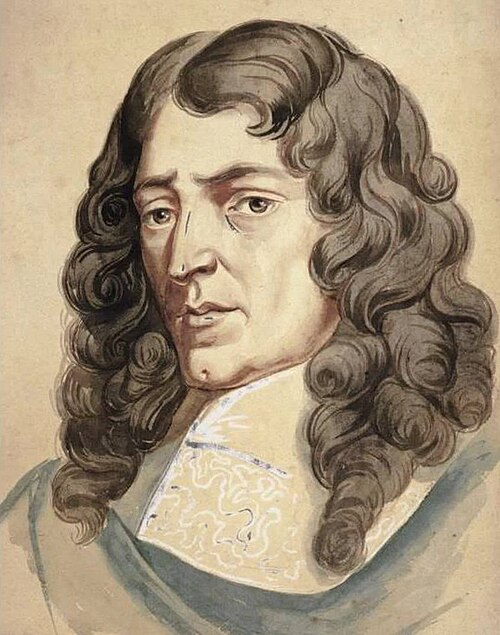
Biographical record: Wikidata, matched on name and checked against dates held in the catalogue. The period label is an estimate from birth year. Authority record: VIAF 87796175. Portrait: Unknown author Unknown author, Public domain, via Wikimedia Commons.