Composer
Delibes, Leo
French composer (1836–1891)
1836–1891
8 works and musical collections
- Born
- 1836
- Died
- 1891
- Birthplace
- La Flèche
- Place of death
- Paris
- Citizenship / historical state
- France
- Period (estimated from birth year)
- Romantic
Biography
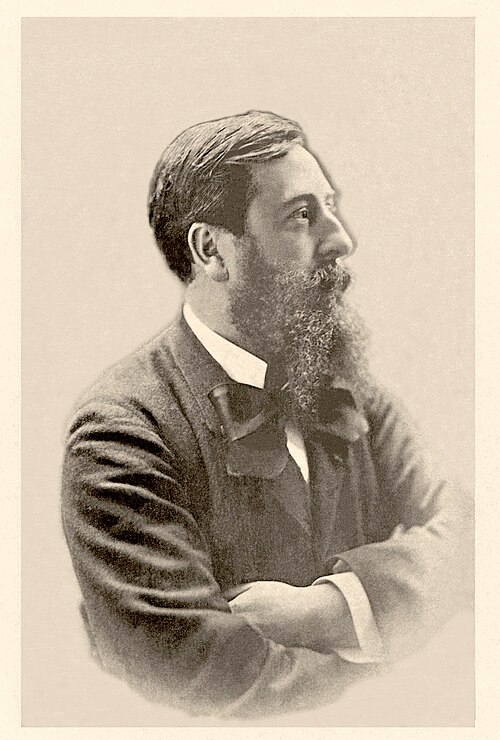
Clément Philibert Léo Delibes (French: [klemɑ̃ filibɛʁ leo dəlib]; 21 February 1836 – 16 January 1891) was a French Romantic composer, best known for his ballets and operas. His works include the ballets Coppélia (1870) and Sylvia (1876) and the opera Lakmé (1883), which includes the well-known "Flower Duet".
Born into a musical family, Delibes enrolled at France's foremost music academy, the Conservatoire de Paris, when he was twelve, studying under several professors including Adolphe Adam. After composing light comic opérettes in the 1850s and 1860s, while also serving as a church organist, Delibes achieved public recognition for his music for the ballet La Source in 1866. His later ballets Coppélia and Sylvia were key works in the development of modern ballet, giving the music much greater importance than previously. He composed a small number of mélodies, some of which are still performed frequently.
Delibes had several attempts at writing more serious operas, and achieved a considerable critical and commercial success in 1883 with Lakmé. In his later years he joined the faculty of the Conservatoire, teaching composition. He died at his home in Paris at the age of 54. Coppélia and Sylvia remain core works in the international ballet repertoire, and Lakmé is revived from time to time in opera houses.
Biography excerpt from Wikipedia contributors, available under CC BY-SA 4.0. Formatting and reference markers have been removed; the introduction may be shortened. View contributors and article history.
Life and musical career
- Occupations
- composer; university teacher; organist
- Education
- Conservatoire de Paris
- Teachers
- Adolphe Adam
- Career institutions / employers
- Conservatoire de Paris; Paris Opera; Theatre Lyrique
- Recorded memberships
- Académie des beaux-arts
- Instruments played
- organ
- Genres
- opera
- Notable works
- Lakmé; Sylvia; Le roi l'a dit; Coppélia
- Birth name
- Clément Philibert Léo Delibes
- Languages used
- French
- VIAF ID
- 29641114
- ISNI
- 0000000110494620
- GND ID
- 118924265
- Library of Congress ID
- n80040391
- MusicBrainz ID
- a56056f7-4e47-4209-abdc-171331ff1089
Recorded in Wikidata. Affiliations may refer to earlier stages of the composer's career.
In this catalogue
- Common listed instruments
- Viola, violin, Piano, Choir, Flute
- Source entries with composition dates
- 0
These details describe the indexed sheet music, including arrangements.
Catalogue
Sheet music catalogue
Instruments describe listed editions, including arrangements. Composition dates and keys appear where recorded; collection pages show their individual contents.
| Title | Work details | Listed instruments | Sheet music |
|---|---|---|---|
| Le Roi Madrigal | See work details |
| View sheet music |
| Le Roi S'Amuse Gaillarde | See work details | See edition details | View sheet music |
| Le Roi S'Amuse Scene du bouquet | See work details |
| View sheet music |
| Le Roi S'Amuse Pavane | See work details |
| View sheet music |
| Le Roi S'Amuse Lesquerade | See work details | See edition details | View sheet music |
| The Flower Duet Performed by Delibes, Leo | See work details |
| View sheet music |
| Pizzicato Performed by Delibes, Leo | See work details |
| View sheet music |
| Waltz | See work details |
| View sheet music |
Biographical record: Wikidata, matched on name and checked against dates held in the catalogue. The period label is an estimate from birth year. Authority record: VIAF 29641114. Portrait: Unidentified photographer, Public domain, via Wikimedia Commons.