Composer
Johann Sebastian Bach
1685–1750
17,098 works in the index
- Era
- Baroque
- Nationality
- Saxe-Eisenach
- Born in
- Eisenach
Bach wrote more music that ordinary players actually use than any other composer, which is why this catalogue holds over 17,000 entries under his name. He spent his career as a working church and court musician, producing to deadline, and almost none of it was published in his lifetime.
For keyboard players the entry points are the Notebook for Anna Magdalena and the Little Preludes, both genuinely playable within a few years of starting. The Two-Part Inventions come next, then the Well-Tempered Clavier, which is a lifetime's work rather than a stage to pass through. String players meet him through the solo suites and partitas; singers and choirs through the cantatas, Passions and the B minor Mass.
Editions matter here more than for most composers. Bach notated sparingly — little dynamic marking, inconsistent articulation, ornaments left to convention — so every edition is an interpretation. A nineteenth-century performing edition, which is what most free scans are, will hand you a fully marked page reflecting a style of playing that has since been substantially revised. For anything you intend to perform, a modern urtext is worth the outlay.
Catalogue
Works page 301 of 357
French Suite No. 6 in E Major
Cantata No. 007: "Christ unser Herr zum Jordan kam"
Cantata No. 009: "Es ist das Heil uns kommen her"
Joy of Man's Desire/Angels We Have Heard On High
Violin Concerto No. 2 In E Major
Aria "Erbauliche Gedanken eines Tabakrauchers" - No. 20b from "Notebook of Anna Magdalena Bach"
March in E-flat major - No. 23 from "Notebook of Anna Magdalena Bach"
Prelude - No. 2a from "Notebook of Anna Magdalena Bach"
Allemande, No. 2b from "Notebook for Anna Magdalena Bach"
Sarabande - No. 2d from "Notebook of Anna Magdalena Bach"
Tempo di Gavotta - No. 2e from "Notebook of Anna Magdalena Bach"
Lesson - No. 32 from "Notebook of Anna Magdalena Bach"
Aria "Bist du bei mir" - No. 25 from "Notebook of Anna Magdalena Bach"
Menuet in G major - No. 26 from "Notebook of Anna Magdalena Bach"
Polonaise in G major - No. 28 from "Notebook of Anna Magdalena Bach"
Allemande - No. 30a from "Notebook of Anna Magdalena Bach"
Notebook of Anna Magdalena Bach, no. 31a: Allemande
Solo per il Cembalo - No. 27 from "Notebook of Anna Magdalena Bach"
Praeludium - No. 29 from "Notebook of Anna Magdalena Bach"
Sarabande - No. 31c from "Notebook of Anna Magdalena Bach"
Recitativo and Aria "Ich habe genug!" - No. 34 from "Notebook of Anna Magdalena Bach"
Sarabande - No. 30c from "Notebook of Anna Magdalena Bach"
Aria "Schaff's mit mir" - No. 35 from "Notebook of Anna Magdalena Bach"
Aria di Govannini - No. 37 from "Notebook of Anna Magdalena Bach"
Aria "Schlummert ein" - No. 38 Fragment from "Notebook of Anna Magdalena Bach"
Gigue - No. 30f from "Notebook of Anna Magdalena Bach"
Courante - No. 31b from "Notebook of Anna Magdalena Bach"
Deposuit, No. 8 from "Magnificat in D Major"
Cantata No. 33: Allein zu dir, Herr Jesu Christ, BWV33
Quia fecit mihi magna, No. 5 from "Magnificat in D Major"
Toccata for Organ, No. 3, BWV566
Variant of Invention No. 1
Violin Partita No. 1 in B Minor
Variant of Sonata 1 in G Major for Viola da Gamba and Clavier, No. 3 - Adagio e piano
Variant of Sonata 1 in G Major for Viola da Gamba and Clavier, No. 4 - Presto
Variant of Sonata 1 in G Major for Viola da Gamba and Clavier, No. 2 - Allegro ma non presto
Orchestral Suite No. 3 in D Major - Score
Partita No. 3 in A Minor, BWV 827
Partita No. 1 in B-flat Major, BWV 825
Partita No. 4 in D Major, BWV 828
Partita No. 5 in G Major, BWV 829
Partita No. 6 in E Minor, BWV 830
Cantata No. 36: Schwingt freudig euch empor/Anhang, BWV36
Partita No. 2 in C Minor, BWV 826
Cantata No. 62: Nun Komm, der Heiden Heiland: II, BWV62
Quia respexit humilitatem, No. 3 from "Magnificat in D Major"
Prelude No. 1
Cantata No. 73: Herr, wie du willt, so schick's mit mir, BWV73
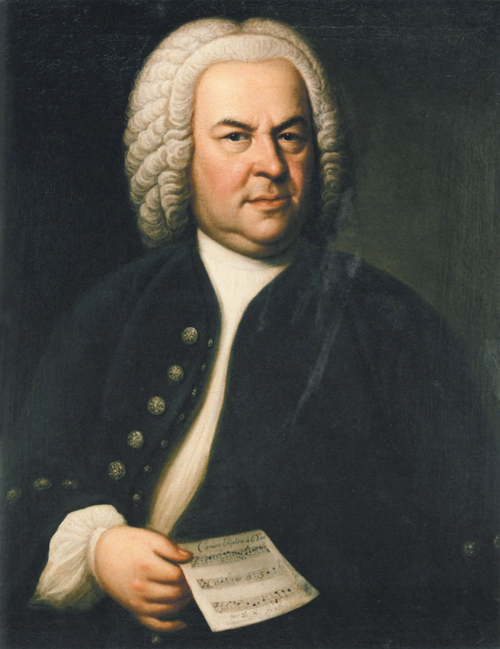
Dates, era and nationality from Wikidata, matched on name and verified against any dates already held here. The biography above is our own. Portrait: Elias Gottlob Haussmann, Public domain, via Wikimedia Commons.