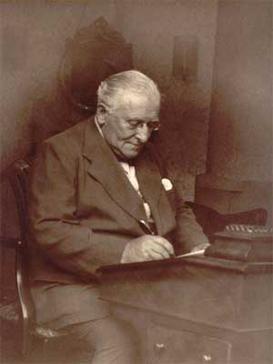
Composer
Albert Ketelbey
English composer, conductor and pianist (1875–1959)
1875–1959
64 works and musical collections
- Born
- 1875
- Died
- 1959
- Birthplace
- Aston
- Place of death
- Cowes
- Citizenship / historical state
- United Kingdom
- Period (estimated from birth year)
- Modern
Biography
Albert William Ketèlbey (; born Ketelbey; 9 August 1875 – 26 November 1959) was an English composer, conductor and pianist, best known for his short pieces of light orchestral music. He was born in Birmingham and moved to London in 1889 to study at Trinity College of Music. After a brilliant studentship he did not pursue the classical career predicted for him, becoming musical director of the Vaudeville Theatre before gaining fame as a composer of light music and as a conductor of his own works.
For many years Ketèlbey worked for a series of music publishers, including Chappell & Co and the Columbia Graphophone Company, making arrangements for smaller orchestras, a period in which he learned to write fluent and popular music. He also found great success writing music for silent films until the advent of talking films in the late 1920s.
The composer's early works in conventional classical style were well received, but it was for his light orchestral pieces that he became best known. One of his earliest works in the genre, In a Monastery Garden (1915), sold over a million copies and brought him to widespread notice; his later musical depictions of exotic scenes caught the public imagination and established his fortune. Such works as In a Persian Market (1920), In a Chinese Temple Garden (1923), and In the Mystic Land of Egypt (1931) became best-sellers in print and on records; by the late 1920s he was Britain's first millionaire composer. His celebrations of British scenes were equally popular: examples include Cockney Suite (1924) with its scenes of London life, and his ceremonial music for royal events. His works were frequently recorded during his heyday, and a substantial part of his output has been put on CD in more recent years.
Ketèlbey's popularity began to wane during the Second World War and his originality also declined; many of his post-war works were re-workings of older pieces and he increasingly found his music ignored by the BBC. In 1949 he moved to the Isle of Wight, where he spent his retirement, and he died at home in obscurity. His work has been reappraised since his death; in a 2003 poll by the BBC radio programme Your Hundred Best Tunes, Bells Across the Meadows was voted the 36th most popular tune of all time. On the last night of the 2009 Proms season the orchestra performed his In a Monastery Garden, marking the fiftieth anniversary of Ketèlbey's death—the first time his music had been included in the festival's finale.
Biography excerpt from Wikipedia contributors, available under CC BY-SA 4.0. Formatting and reference markers have been removed; the introduction may be shortened. View contributors and article history.
Life and musical career
- Education
- Royal Birmingham Conservatoire
- Instruments played
- piano
- Genres
- classical music
- Notable works
- In a Persian Market; In a Monastery Garden; In a Chinese Temple Garden; In the Mystic Land of Egypt; The Heart's Awakening
- Official website
- http://www.albertketelbey.org.uk
- Birth name
- Albert William Ketelby
- Languages used
- English
- VIAF ID
- 42025688
- ISNI
- 0000000118753164; 0000000368617819; 0000000368617851; 0000000368617843; 0000000368617835; 0000000368617827
- GND ID
- 122978331
- Library of Congress ID
- n81078907
- MusicBrainz ID
- ec4ba9cc-3b8e-41a3-859c-59737bbe01e1
Recorded in Wikidata. Affiliations may refer to earlier stages of the composer's career.
In this catalogue
- Common listed instruments
- Piano, Voice, Cello, Baritone, Orchestra
- Genres represented
- Classical, Jazz
- Source entries with composition dates
- 0
These details describe the indexed sheet music, including arrangements.
Catalogue
Sheet music catalogue page 1 of 2
Instruments describe listed editions, including arrangements. Composition dates and keys appear where recorded; collection pages show their individual contents.
Biographical record: Wikidata, matched on name and checked against dates held in the catalogue. The period label is an estimate from birth year. Authority record: VIAF 42025688. Portrait: Unknown Unknown, Public domain, via Wikimedia Commons.