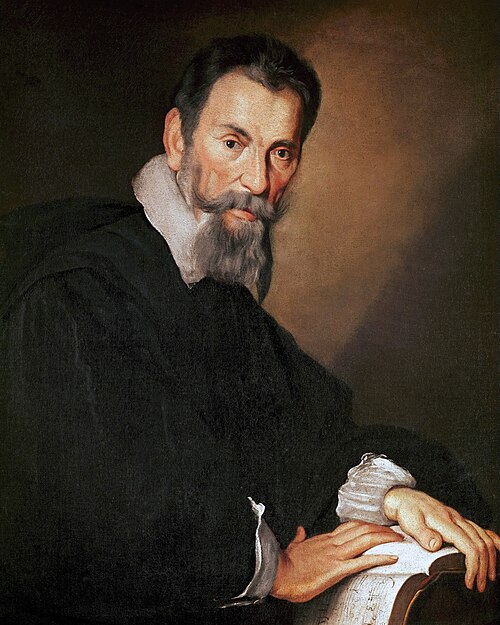
Composer
Claudio Monteverdi
Italian composer, string player, choirmaster, and priest (1567–1643)
1567–1643
528 works in the index
- Born
- 1567
- Died
- 1643
- Birthplace
- Cremona
- Citizenship / historical state
- Republic of Venice
- Period (estimated from birth year)
- Renaissance
Biography
Claudio Monteverdi, the great Italian composer of the early Baroque period, was born on May 15, 1567 in Cremona, east of Milan. He was a gambist, that is, a performer on the viola da gamba, a stringed instrument central to the music of his time.
In 1607, Monteverdi composed LâOrfeo, to a libretto by Alessandro Striggio. This is an operatic re-telling of the classical legend of Orpheus, who descended into Hades in an unsuccessful attempt to bring his beloved Eurydice back to the world of the living. LâOrfeo remains in the operatic repertoire today.
Monteverdi is also remembered for his sacred music, notably his Vesper Psalms, which some musicologists see as foreshadowing Handelâs Messiah and Bachâs St Matthew Passion.
His final work was Lâincoronazione di Poppea (The Coronation of Poppea), composed in 1642, the year before his death. This, too, survives as part of the operative canon.
In this catalogue
- Common listed instruments
- Voice, Piano, violin, Choir, Viola
- Genres represented
- Classical
- Works with composition dates
- 11 of 528
These details describe the indexed sheet music, including arrangements.
Catalogue
Works page 8 of 11
Years are composition dates where known. Instruments describe editions in our catalogue and may include arrangements. A dash means the detail is not recorded.
| Work | Year composed | Catalogue / opus | Key in title | Listed instruments | Genre | Editions |
|---|---|---|---|---|---|---|
| Hodie Christus natus est | — | — | — | Choir | Classical | — |
| I: Lasciate mi morire / Vom Dasein lasst mich scheiden -Ivan lingua mortale / Vergebens sterblich sprechen | — | — | — | Choir | Classical | — |
| Scherzo | — | — | — | Recorder | Classical | — |
| Theme | — | — | — | Clarinet | Classical | — |
| Requiem, Theme From | — | — | — | Horn, Trombone, Cornet | Classical | — |
| Dio, fulgor della bufera | — | — | — | Voice | Classical | — |
| Chi all' esca ha morso | — | — | — | Voice | Classical | — |
| Quando narravi l'esule | — | — | — | Voice | Classical | — |
| E tu m'amavi per le mie | — | — | — | Voice | Classical | — |
| Dove guardi splendono | — | — | — | Voice | Classical | — |
| Era la notte Cassio dormia | — | — | — | Voice | Classical | — |
| Si, pel ciel mar moreo | — | — | — | Voice | Classical | — |
| Dio ti gioeondi, o sposo | — | — | — | Voice | Classical | — |
| Vieni; l'aula e deserta | — | — | — | Voice | Classical | — |
| Questa e una ragna | — | — | — | Voice | Classical | — |
| E un di sul mio | — | — | — | Voice | Classical | — |
| Prega per chiadorando | — | — | — | Voice | Classical | — |
| E tu come sei pallida! | — | — | — | Voice | Classical | — |
| Credo In Un Dio Crudel | — | — | — | Piano, Voice | Classical | — |
| Ritorna Vincitor | — | — | — | Piano, Voice | Classical | — |
| Saper Vorreste | — | — | — | Piano, Voice | Classical | — |
| Deserto Sulla Terra | — | — | — | Voice | Classical | — |
| Dal Labbro Il Canto | — | — | — | Voice | Classical | — |
| Si: corre voce | — | — | — | Voice | Classical | — |
| Dessa! | — | — | — | Voice | Classical | — |
| Su! del Nilo | — | — | — | Voice | Classical | — |
| L'insana parola | — | — | — | Voice | Classical | — |
| Nume, custode | — | — | — | Voice | Classical | — |
| Fu la sorte dell' | — | — | — | Voice | Classical | — |
| Amore! gaudio | — | — | — | Voice | Classical | — |
| Vieni o guerriero | — | — | — | Voice | Classical | — |
| Ciel! mio padre! | — | — | — | Voice | Classical | — |
| Rivedrai le foreste | — | — | — | Voice | Classical | — |
| Io son disonorato! | — | — | — | Voice | Classical | — |
| Morir! si pura | — | — | — | Voice | Classical | — |
| Immenso Ftha | — | — | — | Voice | Classical | — |
| Dio, che nell' alma | — | — | — | Voice | Classical | — |
| Non pianger, mia compagna | — | — | — | Voice | Classical | — |
| O mia Regina | — | — | — | Voice | Classical | — |
| S'ancor si piange | — | — | — | Voice | Classical | — |
| Tu Che Le Vanita | — | — | — | Voice | Classical | — |
| Per Me Giunto | — | — | — | Voice | Classical | — |
| Io La Vidi | — | — | — | Voice | Classical | — |
| So che se andiam | — | — | — | Voice | Classical | — |
| M'ardea l'estro | — | — | — | Voice | Classical | — |
| Quell'o tre! quel tino! | — | — | — | Voice | Classical | — |
| Prima di tutto | — | — | — | Voice | Classical | — |
| Giunta all'Albergo | — | — | — | Voice | Classical | — |
Biographical record: Wikidata, matched on name and checked against dates held in the catalogue. The period label is an estimate from birth year. Authority record: VIAF 44485902. Portrait: Bernardo Strozzi, Public domain, via Wikimedia Commons.