JustSheetMusic
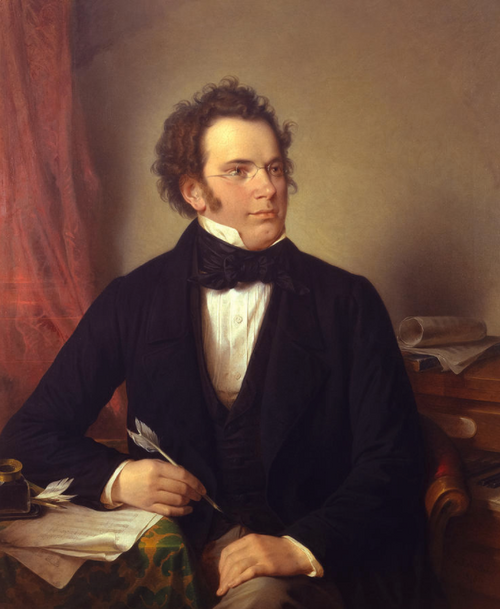
Portrait of Franz Schubert

Composer

Franz Schubert

Austrian composer (1797–1828)

1797–1828

6,176 works in the index

Born
1797
Died
1828
Birthplace
Himmelpfortgrund
Place of death
Vienna
Citizenship / historical state
Austrian Empire; Archduchy of Austria
Period (estimated from birth year)
Romantic

Biography

Schubert wrote over six hundred songs before dying at thirty-one, and it is the songs that dominate this catalogue. If you sing, this is the central repertoire; if you accompany, the piano parts are full partners rather than support, and considerably harder than they sound.

The song cycles — Die schöne Müllerin, Winterreise, Schwanengesang — are published complete and in high, medium and low keys. Buying the wrong transposition is the standard mistake here, because the cycles sit in a range that punishes guessing.

For pianists the Impromptus and Moments musicaux are the accessible way in, and the four-hand duets are among the best music written for two people at one instrument. The late sonatas are enormous and are not a place to start.

Life and musical career

Occupations
composer; pianist; teacher
Education
University of Music and Performing Arts Vienna; Akademisches Gymnasium
Teachers
Antonio Salieri
Instruments played
piano; violin
Genres
classical music
Notable works
Symphony No. 8; Symphony No. 9; Symphony No. 3; Winterreise; Death and the Maiden; Ellens dritter Gesang
Birth name
Franz Peter Schubert
Languages used
German
VIAF ID
29719275; 48146998424018940534
ISNI
0000000120958492
GND ID
118610961
Library of Congress ID
n50000561
MusicBrainz ID
f91e3a88-24ee-4563-8963-fab73d2765ed

Recorded in Wikidata. Affiliations may refer to earlier stages of the composer's career.

In this catalogue

Common listed instruments
Piano, Voice, Low Voice, violin, Clarinet
Genres represented
Classical, pop, Pop, Jazz, Children
Works with composition dates
322 of 6,176

These details describe the indexed sheet music, including arrangements.

Catalogue

Works page 64 of 129

Years are composition dates where known. Instruments describe editions in our catalogue and may include arrangements. A dash means the detail is not recorded.

Works and available sheet music details
WorkYear composedCatalogue / opusKey in titleListed instrumentsGenreEditions
Abschied von der Erde, D.829 — D.829— —— 0
Abschied von der Harfe, D.406 — D.406— —— 0
Abschied von einem Freunde, D. 578 — D. 578— voice piano— 0
Abschied, D.475 — D.475— —— 0
Adrast — —— —— 0
Am Grabe Anselmos, D.504 (Op.6 No.3) — D.504; Op.6 No.3— —— 0
An Mignon, D.161 (Op.19 No.2) — D.161; Op.19 No.2— —— 0
An Schwager Kronos, D.369 (Op.19 No.1) — D.369; Op.19 No.1— —— 0
Gesang (An Sylvia) — —— —— 0
An den Mond (Goethe, 1st setting), D.259 — D.259— —— 0
An den Mond (Goethe, 2nd setting), D.296 — D.296— —— 0
An den Mond in einer Herbstnacht, D.614 — D.614— —— 0
An den Mond, D.193 (Op.57 No.3) — D.193; Op.57 No.3— —— 0
An den Mond, D.468 — D.468— —— 0
An die Leier, D.737 (Op.56 No.2) — D.737; Op.56 No.2— —— 0
An die Musik, D.547 — D.547— —— 0
An die Nachtigall, D.196 (Op.172 No.3) — D.196; Op.172 No.3— —— 0
An die Nachtigall, D.497 (Op.98 No.1) — D.497; Op.98 No.1— —— 0
An die untergehende Sonne, D.457 — D.457— —— 0
An mein Klavier, D.342 — D.342— —— 0
Auf dem See, D.543 (Op.92 No.2) — D.543; Op.92 No.2— —— 0
Auf dem Wasser zu singen, D.774 (Op.72) — D.774; Op.72— —— 0
Auf der Donau, D.553 — D.553— —— 0
Ave Maria D.839 — D.839— —— 0
Bundeslied, D.258 — D.258— —— 0
Das Lied im Grünen — —— —— 0
Das Mädchen aus der Fremde, D.117 — D.117— —— 0
Das Mädchen aus der Fremde, D.252 — D.252— —— 0
Das Mädchen von Inistore. D.281 — D.281— —— 0
Das Mädchen, D.652 — D.652— —— 0
Du bist die Ruh, D.776 (Op.59 No.3) — D.776; Op.59 No.3— —— 0
Du liebst mich nicht, D.756 (Op.59 No.1) — D.756; Op.59 No.1— —— 0
Der Einsame, D.800 (Op.41) — D.800; Op.41— —— 0
1. Dessen Fahne Donnersturme wallte D 58 — —— ChoirClassical 1
3. Trinklied im Winter: Das Glas gefult! D 242 — —— ChoirClassical 4
4. Wilkommeen, lieber schoner Mai (Kanon) D 244 — —— ChoirClassical 1
II. Gesellige Stucke fur Chor (oder ?Einzelstimmen) mit Klavierbegleitung — —— ChoirClassical 1
7. Zur guten Nacht: Horscht auf! (mit Bariton solo) D 903 — —— —— 0
8. Das Dorfchen: Ich ruhme mir mein Dorfchen hier D 598 — —— —— 0
9. Die Nachtigall: Bescheiden Verbogen im Buschichten Gang D 724 — —— —— 0
10. Geist der Liebe: Der Abend schleiert Flur und Hain D 747 — —— —— 0
11. Fruhlingsgesang: Schmucket die Locken Mit duftigen D 740 — —— —— 0
12. Der Gondelfahrer: Es tanzen Mond und Sterne D 809 — —— —— 0
13. Im Gegenwartigen Vergangenes: Ros' und Lilie morgenaulich D 710 — —— —— 0
14. Nachtelle: die Nacht ist heiter (mit Tenor solo) D 892 — —— ChoirClassical 1
15. Stanchen: Zogernd, leise (mit Alt solo) D 920 (1 Fassung) — —— ChoirClassical 0
16. Mondenschein: Des Mondes Zauberblume lacht (fer funf Stimmen, tenor I solo) D 875 — —— —— 0
IV. Quartette und Ein Quintett fur Einzelstimmen (oder Chor) a capella — —— ChoirClassical 1

Biographical record: Wikidata, matched on name and checked against dates held in the catalogue. The period label is an estimate from birth year. The biography above is our own. Authority record: VIAF 48146998424018940534. Portrait: Wilhelm August Rieder, Public domain, via Wikimedia Commons.