JustSheetMusic
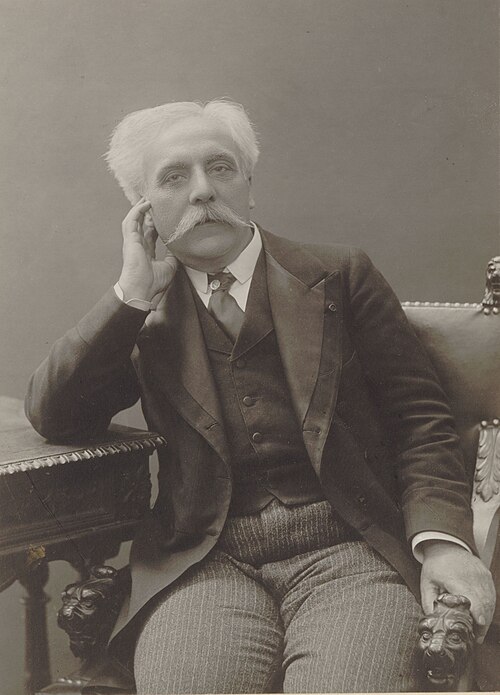
Portrait of Gabriel Fauré

Composer

Gabriel Fauré

1845–1924

837 works in the index

Born
1845
Died
1924
Birthplace
Pamiers
Citizenship / historical state
France
Period (estimated from birth year)
Romantic

Biography

Fauré wrote music that looks straightforward on the page and is not, which is exactly what makes him useful and frustrating in equal measure.

For pianists the Barcarolles, Nocturnes and the four-hand Dolly suite are the core; Dolly is the accessible way in and genuinely delightful. The Requiem is one of the most-sung choral works in existence and is published in two quite different versions — the small-scale original and the later full orchestration — with vocal scores for both. Singers have over a hundred songs, of which Après un rêve is the one everyone knows.

His harmony moves in ways that do not fall under the fingers by habit, and his pedalling is not marked. An edition with sensible fingering earns its price; there is no urtext controversy worth worrying about.

In this catalogue

Common listed instruments
Piano, Voice, Flute, Vocal, Cello
Genres represented
Classical, Christmas, Latin, Pop, Children
Works with composition dates
115 of 837

These details describe the indexed sheet music, including arrangements.

Catalogue

Works page 11 of 18

Years are composition dates where known. Instruments describe editions in our catalogue and may include arrangements. A dash means the detail is not recorded.

Works and available sheet music details
WorkYear composedCatalogue / opusKey in titleListed instrumentsGenreEditions
Cantique de Jean Racine: B — —— —— —
Cantique de Jean Racine: Harp — —— —— —
Pie Jesu from "Requiem": Cello — —— —— —
Mandoline for String Orchestra — —— —— —
Pavane: 1st Violin — —— —— —
Pavane: 2nd Violin — —— —— —
Pavane: 3rd Violin (Viola ) — —— —— —
Pavane: String Bass — —— —— —
Apres un reve for String Orchestra — —— —— —
Fauré: Sicilienne, Op. 78 — Op. 78— —— —
Fauré: Élégie, Op. 24 — Op. 24— —— —
Cantique de Jean Racine: 2nd Oboe — —— —— —
Cantique de Jean Racine: English Horn — —— —— —
Cantique de Jean Racine: 2nd Bassoon — —— —— —
Cantique de Jean Racine: E — —— —— —
Cantique de Jean Racine: 2nd E — —— —— —
Cantique de Jean Racine: 1st Trombone — —— —— —
Cantique de Jean Racine: 2nd Trombone — —— —— —
Cantique de Jean Racine: 3rd Trombone — —— —— —
Cantique de Jean Racine: Baritone B.C. — —— —— —
Cantique de Jean Racine: Tuba — —— —— —
Cantique de Jean Racine: String Bass — —— —— —
Cantique de Jean Racine: 1st Percussion — —— —— —
Cantique de Jean Racine: Timpani — —— —— —
Pie Jesu from "Requiem": 1st Violin — —— —— —
Pie Jesu from "Requiem": 2nd Violin — —— —— —
Pie Jesu from "Requiem": Viola — —— —— —
Pie Jesu from "Requiem": String Bass — —— —— —
Cantique de Jean Racine: Bells — —— —— —
Pie Jesu from "Requiem": Score — —— —— —
Cantique de Jean Racine: Score — —— —— —
Poëme D'Un Jour — —— —— —
Sicilienne/March — —— Flute, Oboe— —
Pie Jesu, from Requiem Op. 48, No 4 — Op. 48, No 4— Tuba, Euphonium— —
Pavane & Sicilienne — —— —— —
Requiem, op. 48: VII. In Paradisum — op. 48— —— —
Requiem, op. 48: VI. Libera me — op. 48— —— 1
Requiem, op. 48 : I. Introït et Kyrie — op. 48— —— —
Requiem, op. 48 : II. Offertoire — op. 48— —— —
Berceuse for Violin and Piano in D major, op. 16 — op. 16D major —— —
Clair de lune, op. 46 no. 2 1887Wikidata op. 46 no. 2— —— 7
Les Berceaux, op. 23 no. 1 — op. 23 no. 1— —— 7
Mandoline, op. 58 no. 1 — op. 58 no. 1— —— 6
Morceau de concours pour flûte et piano (Concours 1898) — —— FluteClassical —
Requiem, op. 48 — op. 48— —— 17
Romance sans paroles, op. 17, no. 3 — op. 17, no. 3— PianoClassical 12
Barcarolle No. 4 in A flat Major, op. 44 — op. 44A-flat major —Classical 9
Dolly, Op. 56 - 1. Berceuse — Op. 56— Piano— 1

Biographical record: Wikidata, matched on name and checked against dates held in the catalogue. The period label is an estimate from birth year. The biography above is our own. Authority record: VIAF 8754158915881750000008. Portrait: Eugène Pirou, Public domain, via Wikimedia Commons.