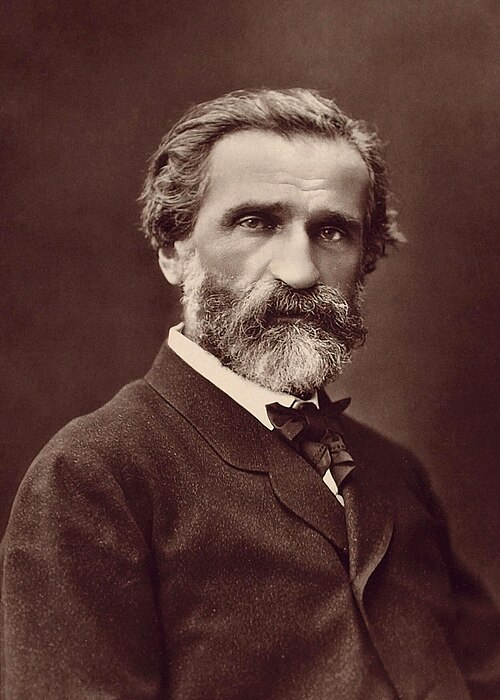
Composer
Giuseppe Verdi
1813–1901
2,449 works in the index
- Born
- 1813
- Died
- 1901
- Birthplace
- Le Roncole
- Citizenship / historical state
- Kingdom of Italy
- Period (estimated from birth year)
- Romantic
Biography
Verdi wrote for the voice above everything else, and his catalogue is dominated by opera — twenty-eight of them, plus the Requiem, which is an opera in all but name and staging.
Singers meet him through the aria anthologies rather than the full scores, and that is the right way in: a vocal score of Rigoletto is several hundred pages of which you may want four. The standard collections are published by voice type, and Verdi is unusually demanding about which — a role written for a spinto soprano does not suit a light lyric voice, whatever the notes look like on the page.
For everyone else there are the choruses, which choirs sing constantly and which are published as individual octavos. The one from Nabucco is effectively Italy's second national anthem and is available in more arrangements than any other chorus in the repertoire.
In this catalogue
- Common listed instruments
- Voice, Piano, Orchestra, Choir, Organ
- Genres represented
- Classical, pop, Pop, Folk, Children
- Works with composition dates
- 41 of 2,449
These details describe the indexed sheet music, including arrangements.
Catalogue
Works page 4 of 52
Years are composition dates where known. Instruments describe editions in our catalogue and may include arrangements. A dash means the detail is not recorded.
| Work | Year composed | Catalogue / opus | Key in title | Listed instruments | Genre | Editions |
|---|---|---|---|---|---|---|
| Nume, custode | — | — | — | — | Classical | 7 |
| Amore! gaudio | — | — | — | — | Classical | 7 |
| Gloria all' Egitto | — | — | — | — | Classical | 7 |
| Vieni o guerriero | — | — | — | — | Classical | 7 |
| O tu che sei d'Osiride | — | — | — | — | Classical | 7 |
| Gia i sacerdo | — | — | — | — | Classical | 7 |
| Morir! si pura | — | — | — | — | Classical | 7 |
| Immenso Ftha | — | — | — | — | Classical | 7 |
| Attila - Act I: 'Mentre gonfiarsi l'anima' (Attila) | — | — | — | — | — | 4 |
| L'te Vurria Vasa (Russo And Di Capua) | — | — | — | Piano | Classical | 3 |
| 6 Romanze (1838) | — | — | — | Piano | Classical | 4 |
| 5. Perduat ho la pace | — | — | — | Piano, Organ, Voice | Classical | 4 |
| Come poteva un angelo from I Lombardi alla prima Crociata | — | — | — | Piano, Voice | Classical | 4 |
| Nell'argilla maledetta from I Masnadieri | — | — | — | Piano, Voice | Classical | 4 |
| Vecchio! spiccai da te from I Masnadieri | — | — | — | Piano, Voice | Classical | 4 |
| La sua lampada vitale from I Masnadieri | — | — | — | Piano, Voice | Classical | 4 |
| Mina, pensai che un angelo from Aroldo | — | — | — | Piano, Voice | Classical | 4 |
| La Rosca (Academio Calignoso) | — | — | — | Guitar | Classical | 4 |
| Laudi Alla Vergine | — | — | — | Choir | Classical | 5 |
| Qual voce! | — | — | — | — | Classical | 6 |
| Mal reggendo | — | — | — | — | Classical | 6 |
| L'onore! Ladri! | — | — | — | — | Classical | 8 |
| Non pianger, mia compagna | — | — | — | — | Classical | 7 |
| Ah, what a joy to see | — | — | — | — | Classical | 6 |
| Eri Tu Che Macchiavi | — | — | — | — | Classical | 4 |
| Nella guerra e la | — | — | — | — | Classical | 7 |
| Le brezza aleggia | — | — | — | Voice | Classical | 4 |
| Non so le tetre immagini from IL CORSARO | — | — | — | — | Classical | 4 |
| Vola talor dal carcere from IL CORSARO | — | — | — | — | Classical | 4 |
| To puniscimi, o Signore from LUISA MILLER | — | — | — | — | Classical | 4 |
| Di sprezzo degno se stesso rende | — | — | — | Piano | Classical | 4 |
| Teneste la promessa | — | — | — | Piano | Classical | 4 |
| Made, Pietosa Vergine | — | — | — | Voice | Classical | 5 |
| La Traviata - Act II: 'Di Provenza il mar' Performed by Giuseppe Verde | 1853, revised 1854, 1864IMSLP | — | — | — | — | 5 |
| Aida, Act I, Part 1 - Alta cagion v'aduna | — | — | — | Voice | Classical | 5 |
| Aida, Act I, Part 2 - Scene II: Possente Ftha! | — | — | — | Voice | Classical | 5 |
| Aida, Act II, Part 2 - Ma tu, Re | — | — | — | Voice | Classical | 4 |
| Aida, Act III - O tu, che sei d'Osiride | — | — | — | Voice | Classical | 5 |
| Aida, Act IV - Sacerdoti: compiste un delitto! | — | — | — | Voice | Classical | 5 |
| Prelude To Act I | — | — | — | Piano | Classical | 3 |
| Triumphal March from "Aida" - Horn | — | — | — | — | Classical | 5 |
| Un ballo in maschera | 1859IMSLP | — | — | — | Classical | 2 |
| Il corsaro | 1848IMSLP | — | — | — | Classical | 3 |
| Otello | 1885Wikidata | — | — | Oboe, Bassoon, Trombone, Piccolo | Classical | 13 |
| Simon Boccanegra | 1857, revised 1881IMSLP | — | — | — | Classical | 3 |
| Stiffelio | 1850IMSLP | — | — | — | Classical | 3 |
| 3. Offertorio | — | — | — | Voice, Choir | Classical | 4 |
| 2. Stabat Mater | — | — | — | Piano, Choir | Classical | 4 |
Biographical record: Wikidata, matched on name and checked against dates held in the catalogue. The period label is an estimate from birth year. The biography above is our own. Authority record: VIAF 22329110. Portrait: Ferdinand Mulnier, Public domain, via Wikimedia Commons.