Composer
Gustav Mahler
Austrian late-Romantic composer (1860–1911)
1860–1911
324 works in the index
- Born
- 1860
- Died
- 1911
- Birthplace
- Kaliště
- Citizenship / historical state
- Cisleithania
- Period (estimated from birth year)
- Modern
Biography
Many people consider Mahler's work to be somewhat difficult to listen to and indeed, his ten symphonies are all complicated works, utilizing features such as choirs, passages played at loud volume and unconventional arrangements. Not surprisingly, many were unpopular when first performed, although Mahler's works have since become some of the most performed and recorded and he is regarded as having bridged the musical gap between the Romanticism of the 19th century and the modern movement of the 20th.
 Gustav Mahler was born in Bohemia (now the Czech Republic) in 1860 and by his early 20s was a successful composer in various European cities, including Prague, Leipzig and Vienna, then the artistic and intellectual center of Eastern Europe. In 1897, Mahler was appointed director of the Vienna State Opera and during the next decade, would transform it into a world class institution. He also began to compose during this time, until being diagnosed with a heart disease in 1907, which forced him to slow down.
Mahler died in 1911 at the age of 50. Today, despite his relatively small musical output, he is considered to be one of the most important and influential of 19th century composers.
In this catalogue
- Common listed instruments
- Piano, Voice, Low Voice, Orchestra, Trumpet
- Genres represented
- Classical, pop, Pop
- Works with composition dates
- 24 of 324
These details describe the indexed sheet music, including arrangements.
Catalogue
Works page 1 of 7
Years are composition dates where known. Instruments describe editions in our catalogue and may include arrangements. A dash means the detail is not recorded.
| Work | Year composed | Catalogue / opus | Key in title | Listed instruments | Genre | Editions |
|---|---|---|---|---|---|---|
| Symphony no. 5 in C-sharp minor: IV. Adagietto. Sehr langsam | — | — | C-sharp minor | Piano, Organ, Orchestra, String Quartet | Classical, Pop | 52 |
| Ging Heut' Morgen Ubers Feld | — | — | — | Voice, Low Voice | Classical | 36 |
| Symphony No. 4 in G Major | — | — | G major | Piano, Harp, Organ, Cello, Oboe, violin, Bassoon, Double Bass, Horn, Clarinet, Trombone, Timpani, Tuba, Piccolo, p | Classical | 32 |
| Das Klagende Lied | 1878-80, rev. 1892-93, 1898-99IMSLP | — | — | Voice Soprano, Alto | Classical | 4 |
| Mahler: Fourteen Songs including Nine from "Des Knaben Wunderhorn", High Voice (German) | — | — | — | Voice | Classical | 14 |
| Symphony No. 2 in C Minor ('Resurrection'), Fifth Movement Choral Theme | — | — | C minor | Piano, Orchestra | Classical | 9 |
| Rückert Lieder: III. Ich bin der Welt abhanden gekommen | — | — | — | Piano, Voice, Choir, Low Voice | Classical | 14 |
| Symphony No.4 | 1900-01IMSLP | — | — | Triangle, Trumpet, Glockenspiel, Cymbals, Drum | Classical | 7 |
| Des Knaben Wunderhorn: Wer hat dies Liedlein erdacht? | — | — | — | Voice, Low Voice | Classical | 10 |
| Das Lied von der Erde | 1908–09IMSLP | — | — | Tambourine, Triangle, Tamtam, Piccolo, Snare Drum, Cymbals, Drum | Classical | 6 |
| Symphony No. 8 | 1906–07Wikidata | — | — | Piano, Organ, Triangle, Tamtam, Drum, Harmonium | Classical | 8 |
| Symphony No. 1 in D Major ('Titan') | — | — | D major | Piano, Harp, Organ, Cello, Oboe, violin, Bassoon, Double Bass, Horn, Clarinet, Trombone, Timpani, Tuba, Piccolo, p | Classical | 7 |
| Songs of a Wayfarer | 1883-85IMSLP | — | — | Timpani, percussion | Classical | 6 |
| Symphony No.7 | 1904-06IMSLP | — | — | Orchestra, Triangle, Tamtam, Piccolo, English Horn, Glockenspiel, Snare Drum, Cymbals, Drum, Mandolin | Classical | 4 |
| Symphony No.9 | 1909-10Wikidata | — | — | Triangle, Tamtam, Piccolo, Cymbals, Drum, Side drum | Classical | 5 |
| Zwei Blauen Augen, Die | — | — | — | Voice, Low Voice | Classical | 7 |
| German Glossay | — | — | — | Trumpet | Classical | 7 |
| Lieder eines fahrenden Gesellen - Ich hab' ein gluhend Messer | 1883-85IMSLP | — | — | — | Classical | 7 |
| Kindertotenlieder - Nun will die Sonn' so hell aufgeh'n! | 1901-04IMSLP | — | — | — | Classical | 7 |
| Das Lied von der Erde: I. Das Trinklied vom Jammer der Erde | 1908–09IMSLP | — | — | — | Classical | 7 |
| Des Knaben Wunderhorn: Revelge | 1892-96, revised 1899-1901IMSLP | — | — | Piano, Voice, Orchestra, Low Voice | Classical | 8 |
| Symphony No 3 | 1896IMSLP | — | — | Trombone, Tambourine, Triangle, Snare Drum, Cymbals, Drum | Classical | 5 |
| Symphony No.6 | 1903-04Wikidata | — | — | strings, Tambourine, Triangle, Trumpet, Tamtam, Snare Drum, Cymbals, Drum, Xylophone | Classical | 4 |
| Ich atmet einen linden Duft | — | — | — | Piano, Voice, Choir, Low Voice | Classical | 9 |
| Zu Strassburg auf der Schanz | — | — | — | Low Voice | Classical | 6 |
| Ablosung im Sommer | — | — | — | Low Voice | Classical | 6 |
| Symphonies 1, 4, 5, 6, 7 & 9 | 1884-88IMSLP | — | — | Horn, Tuba | Classical | 7 |
| Symphony No. 3 in D Minor | — | — | D minor | Clarinet | Classical | 5 |
| Sympathy No.5 | — | — | — | Piano | Classical, pop | 5 |
| Des Knaben Wunderhorn , Part 1 - Ich ging mit Lust durch einen grunen Wald Performed by Gustav Mahler | — | — | — | — | Classical | 6 |
| Ruckert Lieder - Blicke mir nicht in die Lieder | 1901-02IMSLP | — | — | — | Classical | 6 |
| Theme From Symphony No. 5 | — | — | — | Voice | Classical | 4 |
| Des Knaben Wunderhorn | 1892-96, revised 1899-1901IMSLP | — | — | Voice | Classical | 4 |
| Songs | — | — | — | voice piano | Classical | 4 |
| Symphony No.2 | 1888-94, rev.1903IMSLP | — | — | Triangle, Glockenspiel, Cymbals, Drum | Classical | 5 |
| Symphony No. 5 | 1902IMSLP | — | — | Orchestra, Triangle, Trumpet, Tamtam, Glockenspiel, Cymbals, Drum | Classical | 4 |
| Wenn mein Schatz Hochzeit macht | — | — | — | Voice, Clarinet, Low Voice | Classical | 6 |
| Song of Sorrow | — | — | — | Timpani, percussion | Classical | 4 |
| Song of the Earth | — | — | — | Timpani, percussion | Classical | 4 |
| Ruckert Lieder - Um Mitternacht | 1901-02IMSLP | — | — | — | Classical | 5 |
| Rückert Lieder | 1901-02IMSLP | — | — | Voice | Classical | 3 |
| Part I: Hymnus: Veni, Creator Spiritus | — | — | — | Piano, Choir | Classical | 4 |
| Fruhlingsmorgen | — | — | — | Voice, Low Voice | Classical | 4 |
| Serenade | — | — | — | Low Voice | Classical | 3 |
| Aus! Aus! | — | — | — | Low Voice | Classical | 4 |
| Scheiden und Meiden | — | — | — | Low Voice | Classical | 4 |
| Nicht wiedersehen! | — | — | — | Low Voice | Classical | 3 |
| The Dead Drummer | — | — | — | Piano, Low Voice | Classical | 5 |
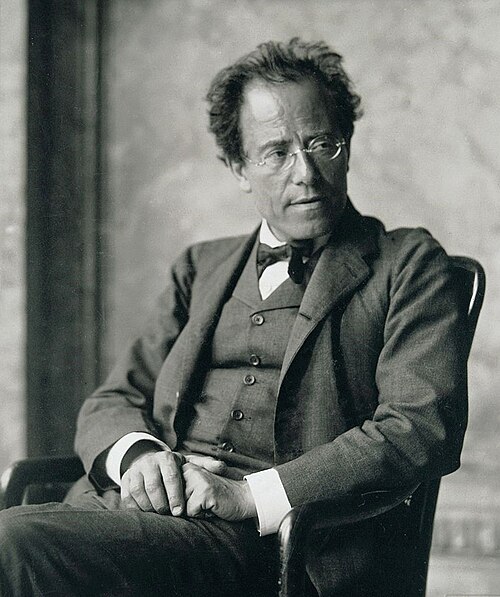
Biographical record: Wikidata, matched on name and checked against dates held in the catalogue. The period label is an estimate from birth year. Authority record: VIAF 6660159248175804870003. Portrait: Moritz Nähr, Public domain, via Wikimedia Commons.