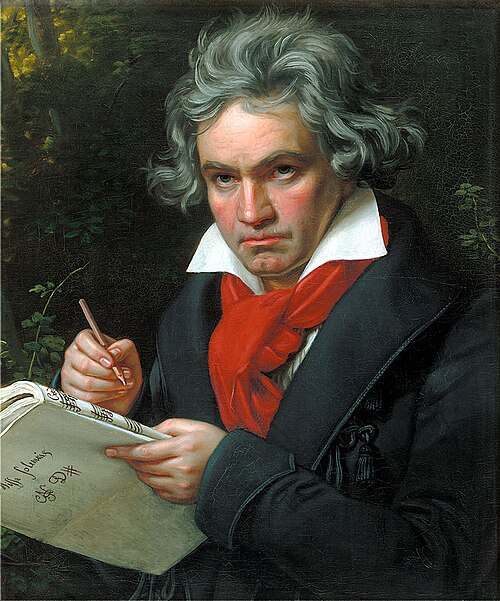
Composer
Ludwig van Beethoven
1770–1827
7,703 works in the index
- Era
- Classical
- Nationality
- Electorate of Cologne
- Born in
- Bonn
Beethoven sits on the hinge between the Classical style he inherited and the Romantic one he made possible, and the catalogue spans both: thirty-two piano sonatas, sixteen string quartets, nine symphonies, five piano concerti and a large body of songs and chamber music.
The piano sonatas are the most-bought and the most misjudged. The famous ones — the Moonlight, the Pathétique, the Waldstein — are advanced works, and the first movement of the Moonlight being playable early does not make the rest of it so. The genuine starting points are the two sonatas of Op. 49 and the bagatelles, including the one everyone knows as Für Elise.
He revised heavily and his manuscripts are difficult, so editions disagree about specific notes and markings more than you might expect from a composer this recent. If you are working with a teacher, use theirs.
Catalogue
Works page 132 of 161
7 Bagatelles, op. 33: No. 1 in E-flat major. Andante grazioso, quasi allegretto
Sonata for Piano no. 14 in C-sharp minor, op. 27 no. 2 "Moonlight"
Die Ruinen von Athen, op. 113: V. Marcia alla turca
Die Ruinen von Athen, op. 113: I. Overtüre
Fidelio, op. 72: Overture
Overture "Leonore" no. 3 in C major, op. 72b
Ouvertüre Coriolan, op. 62: Allegro con brio
Song for Voice and Piano, op. 48 no. 4 in C major: Majestätisch und erhaben "Die Ehre Gottes in der Natur: Die Himmel rühmen des Ewigen Ehre"
Twelve Various Folksongs, WoO 157, No. 1, "God Save the King"
Rondo in A major, WoO 49: Allegretto
Concerto for Piano and Orchestra no. 2 in B-flat major, op. 19: II. Adagio
Sonata for Violin and Piano no. 10 in G major, op. 96
Concerto for Piano and Orchestra no. 5 in E-flat major, op. 73 "Emperor"
"In questa tomba oscura", WoO 133
Scene and Aria for Soprano and Orchestra, op. 65 "Ah! perfido"
Rondo for Piano in C major, op. 51 no. 1: Moderato e grazioso
Symphony no. 6 in F major, op. 68 "Pastorale"
6 Minuets for Piano, WoO 10 no. 2 in G major
Andante for Piano in F major, WoO 57 "Andante favori". Andante grazioso con moto
Symphony no. 9 in D minor, op. 125 "Choral", S. 464 no. 9: IV. Presto – Allegro assai "Ode to Joy"
Polonaise for Piano in C major, op. 89: Alla polacca, vivace
Die Geschöpfe des Prometheus, op. 43: Ouverture
Quartet for 2 Violins, Viola, and Cello no. 14 in C-sharp minor, op. 131
6 Ecossaises in E-flat major, WoO 83
Sonata for Piano no. 8 in C minor, op. 13 "Pathétique"
Große Fugue for 2 Violins, Viola, and Cello in B-flat major, op. 133: Overtura. Allegro - Fuga. Meno mosso e moderato - Allegro molto e con brio - Meno mosso e moderato - Allegro molto e con brio - Allegro
Overture "Leonore", no. 1 in C major, op. 138
Waltz for Piano in D major, WoO 85
Overture "Leonore" no. 2 in C major, op. 72a
Sonata for Piano no. 15 in D major, op. 28 "Pastorale"
Sonata for Violin and Piano no. 9 in A major, op. 47 "Kreutzer"
Rondo for Piano in G major, op. 51 no. 2: Andante cantabile e grazioso
Concerto for Piano and Orchestra no. 4 in G major, op. 58: II. Andante con moto
Concerto for Violin and Orchestra in D major, op. 61
Sonata for Piano no. 27 in E minor, op. 90
König Stephan, op. 117: I. Overtüre
Sonata for Piano no. 21 in C major, op. 53 "Waldstein"
Romance for Violin and Orchestra no. 1 in G major, op. 40: Andante
Symphony no. 4 in B-flat major, op. 60: I. Adagio - Allegro vivace
Symphony no. 9 in D minor, op. 125 "Choral"
An die Hoffnung, op. 32
Symphony no. 4 in B-flat major, op. 60: IV. Allegro ma non troppo
Concerto for Piano and Orchestra no. 4 in G major, op. 58: I. Allegro moderato (cadenza: Ludwig van Beethoven)
7 Variations for Piano in C major on "God Save the King", WoO 78
Concerto for Piano and Orchestra no. 3 in C minor, op. 37: II. Largo
Symphony no. 4 in B-flat major, op. 60: III. Allegro vivace
An die ferne Geliebte, op. 98
Symphony no. 4 in B-flat major, op. 60: II. Adagio
Dates, era and nationality from Wikidata, matched on name and verified against any dates already held here. The biography above is our own. Portrait: Joseph Karl Stieler, Public domain, via Wikimedia Commons.