JustSheetMusic
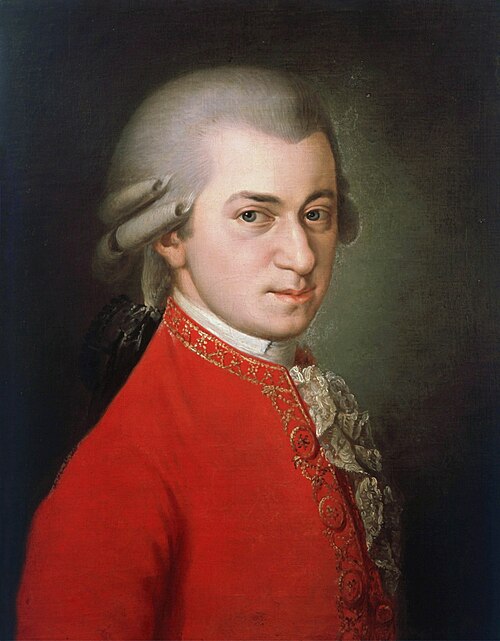
Portrait of Wolfgang Amadeus Mozart

Composer

Wolfgang Amadeus Mozart

1756–1791

10,379 works in the index

Born
1756
Died
1791
Birthplace
Salzburg
Citizenship / historical state
Prince-Archbishopric of Salzburg
Period (estimated from birth year)
Classical

Biography

Mozart wrote across every form available to him in a career of barely thirty years, and the catalogue reflects it: symphonies, concerti, opera, chamber music, sacred works and a body of keyboard music that has been the backbone of piano teaching ever since.

The sonatas are where most players start, and they are harder than they look — the writing is thin enough that every note is exposed and nothing can be hidden behind pedal. K.545 is the famous "easy" one and is still a genuine test of evenness. Singers come to him through the operas; the concert arias are unfairly neglected and often more approachable.

Works are identified by K. numbers, from Köchel's catalogue, which has been revised repeatedly — you will meet the same piece under more than one number in older editions. Where a listing gives a K. number, that is the most reliable way to confirm you are buying the piece you meant.

In this catalogue

Common listed instruments
Piano, violin, Orchestra, Voice, Flute
Genres represented
Classical, pop, Jazz, Pop, New Age
Works with composition dates
453 of 10,379

These details describe the indexed sheet music, including arrangements.

Catalogue

Works page 199 of 217

Years are composition dates where known. Instruments describe editions in our catalogue and may include arrangements. A dash means the detail is not recorded.

Works and available sheet music details
WorkYear composedCatalogue / opusKey in titleListed instrumentsGenreEditions
Porgi amor qualche ristoro, No. 10 from "Le Nozze di Figaro", Act 2, K492 — —— —— —
Voi, che sapete che cosa e amor, No. 11 from "Le Nozze di Figaro", Act 2, K492 — —— —— —
Venite inginocchiatevi, No. 12 from "Le Nozze di Figaro", Act 2, K492 — —— —— —
Susanna or via sortite, No. 13 from "Le Nozze di Figaro", Act 2, K492 — —— —— —
Aprite presto, aprite, No. 14 from "Le Nozze di Figaro", Act 2, K492 — —— —— —
Esci, omai, garzon malnato, No. 15 from "Le Nozze di Figaro", Act 2, K492 — —— —— —
Hai gia vinta la causa!, No. 17 from "Le Nozze di Figaro", Act 3, K492 — —— —— —
Riconosci in questo amplesso, No. 18 from "Le Nozze di Figaro", Act 3, K492 — —— —— —
E Susanna non vien!, No. 19 from "Le Nozze di Figaro", Act 3, K492 — —— —— —
Ricevete, o padroncina, No. 21 from "Le Nozze di Figaro", Act 3, K492 — —— —— —
Ecco la marcia, andiamo!, No. 22 from "Le Nozze di Figaro", Act 3, K492 — —— —— —
L'ho perduta, me meschina!, No. 23 from "Le Nozze di Figaro", Act 4, K492 — —— —— —
Il capro e la capretta, No. 24 from "Le Nozze di Figaro", Act 4, K492 — —— —— —
In quegli anni, in cui val poco, No. 25 from "Le Nozze di Figaro", Act 4, K492 — —— —— —
Tutto e disposto, No. 26 from "Le Nozze di Figaro", Act 4, K492 — —— —— —
Giunse alfin il momento, No. 27 from "Le Nozze di Figaro", Act 4, K492 — —— —— —
Pian, pianin le andro piu presso, No. 28 from "Le Nozze di Figaro", Act 4, K492 — —— —— —
Dies irae, No. 2 from Mass No. 19 in D Minor, K626 — —D minor —— —
Tuba mirum, No. 3 from Mass No. 19 in D Minor, K626 — —D minor —— —
Rex tremendae, No. 4 from Mass No. 19 in D Minor, K626 — —D minor —— —
Recordare, No. 5 from Mass No. 19 in D Minor, K626 — —D minor —— —
Confutatis, No. 6 from Mass No. 19 in D Minor, K626 — —D minor —— —
Lacrimosa, No. 7 from Mass No. 19 in D Minor, K626 — —D minor —— —
Domine Jesu, No. 8 from Mass No. 19 in D Minor, K626 — —D minor —— —
Hostias, No. 9 from Mass No. 19 in D Minor, K626 — —D minor —— —
Sanctus, No. 10 from Mass No. 19 in D Minor, K626 — —D minor —— —
Benedictus, No. 11 from Mass No. 19 in D Minor, K626 — —D minor —— —
Agnus Dei, No. 12 from Mass No. 19 in D Minor, K626 — —D minor —— —
Die Entfuhrung aus dem Serail, Act 3, No. 18 "In Mohrenland gefangen war ein Madel hubsch und fein" — —— —— —
Magic Flute, The, Overture, K620 — —— —— —
Marriage of Figaro, The, Overture, K492 — —— —— —
Clemenza di Tito, La, Overture, K621 — —— —— —
Abduction from the Seraglio, The, Overture, K384 — —— —— —
Impresario, La, Overture, K486 — —— —— —
String Quintet No. 1 in B-Flat Major, K174 — —B-Flat major —— —
Symphony No. 40 in G Minor, K550 — —G minor Orchestra— —
Piano Concerto No. 21 in C Major, K467 — —C major —— —
6 German Dances 1-3, KV586 No. 6, KV567 No. 4-5 — —— —— —
Piano Concerto No. 21 in C Major, Second Movement Excerpt — —C major Piano— —
Symphony No. 40 in G Minor, Third Movement — —G minor Piano, Vocal— —
Rondo from Eine Kleine Nachtmusik — —— —— —
Ave Verum Corpus - K. 618 - Score and Parts — K. 618— —— —
Rondo alla turca - from Piano Sonata in A Major, K. 331 - Score and Parts — K. 331A major —— —
Menuet - from Eine Kleine Nachtmusik, K. 525 — K. 525— —— —
Romanza - from Eine Kleine Nachtmusik, K. 525 — K. 525— —— —
Romanza - from Eine Kleine Nachtmusik, K. 525 - Score and Parts — K. 525— —— —
Alleluia - from the motet Exsultate, Jubilate, K. 165 - Score and Parts — K. 165— —— —
Mozart Symphony No. 40 — —— —— —

Biographical record: Wikidata, matched on name and checked against dates held in the catalogue. The period label is an estimate from birth year. The biography above is our own. Authority record: VIAF 32197206. Portrait: Barbara Krafft, Public domain, via Wikimedia Commons.