Composer
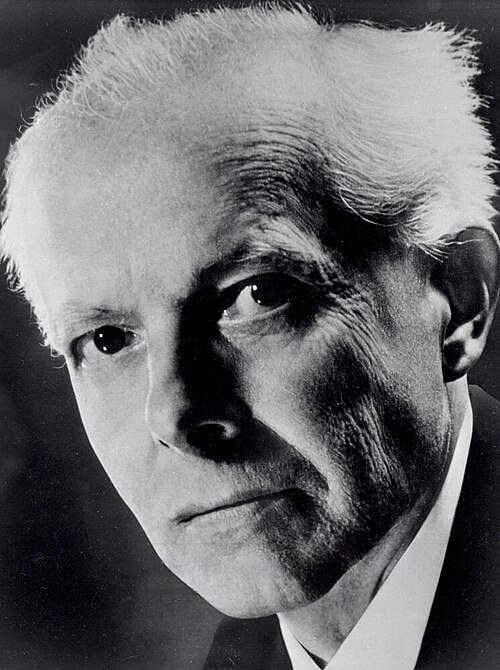
Béla Bartók
Hungarian composer and pianist (1881–1945)
1881–1945
533 works in the index
- Born
- 1881
- Died
- 1945
- Birthplace
- Sânnicolau Mare
- Citizenship / historical state
- United States
- Period (estimated from birth year)
- Modern
Biography
Much of the music that you hear in modern movies has its roots in the sonic landscapes that were pioneered by Béla Bartók. His inventive use of orchestration, harmony, structure and melody still sound fresh and exciting to this day. Born in Hungary in 1881, Bartók was largely considered to be a child prodigy. Bartók frequently remarked that his own melodies were like “imaginary folk tunes”; and as a result most of his compositions exhibit an air of otherworldliness.
Béla had an intense love of folk music, particularly Hungarian and eastern European folk music. He traveled incessantly for a number of years where he wrote very little. He spent those years recording and transcribing folk tunes with a wax-based recording device. Béla Bartók was a complete musician and composer, meaning he had very little interest in other activities outside of music. His concerto for orchestra is one of the most loved (by audiences and orchestras alike) and frequently performed pieces composed in the 20th century. Béla Bartók spent his last years in New York City where he wrote some of his most beloved compositions.
In this catalogue
- Common listed instruments
- Piano, violin, Organ, Clarinet, Orchestra
- Genres represented
- Classical, Dance, Folk
- Works with composition dates
- 53 of 533
These details describe the indexed sheet music, including arrangements.
Catalogue
Works page 1 of 12
Years are composition dates where known. Instruments describe editions in our catalogue and may include arrangements. A dash means the detail is not recorded.
| Work | Year composed | Catalogue / opus | Key in title | Listed instruments | Genre | Editions |
|---|---|---|---|---|---|---|
| Bartók: The First Term | — | — | — | Piano | — | 36 |
| Bartók: 14 Bagatelles, Op. 6 | — | Op. 6 | — | Piano | Classical | 28 |
| Bartók: Ten Easy Pieces | — | — | — | Piano | — | 22 |
| Bartók: Album for Piano | — | — | — | Piano | — | 20 |
| Est | — | — | — | Piano, Organ, Flute, violin | Classical | 13 |
| 10. Hungarian Folk Song (Erzsi Virag made her bed) | — | — | — | Piano | — | 15 |
| Bartók: Sketches, Op. 9 | — | Op. 9 | — | Piano | Classical | 14 |
| Suite No. 2, Op. 4 | — | Op. 4 | — | Piano, Harp, Organ, Cello, Flute, Oboe, violin, Bassoon, Double Bass, Horn, Clarinet, Timpani, percussion, Viola | — | 24 |
| 2. Bear Dance | — | — | — | Piano, Organ, Bassoon | Classical | 12 |
| Sonatina | — | — | — | Piano, Organ, violin | — | 7 |
| 7. Folk Song | — | — | — | Piano | — | 10 |
| Pe Loc | — | — | — | Piano, violin, Bassoon, Double Bass, Timpani, percussion, Euphonium, Saxophone | — | 10 |
| Rhythmic Dance | — | — | — | Piano | Classical | 7 |
| Slovak Peasant's Dance | — | — | — | Piano, Clarinet, Viola | — | 10 |
| Bartók: Four Nenies, Op. 8 | — | Op. 8 | — | Piano | Classical | 8 |
| 14 Bagatelles Op.6 | 1908IMSLP | Op.6 | — | Piano | — | 6 |
| Children's Song from For Children, Book 1 | — | — | — | Piano | — | 8 |
| Minuet from First Term at the Piano | — | — | — | Piano | Classical | 7 |
| Two-Part Invention | — | — | — | Piano | — | 6 |
| Dedication | — | — | — | Piano | — | 6 |
| Slow Struggle | — | — | — | Piano | — | 7 |
| Little Scherzo [Sz. 52:82] | — | — | — | Piano, Organ | — | 8 |
| Waltz Additional credits Emil Breslaur | — | — | — | Piano | — | 5 |
| Round Dance from for Children, Part 1 [No. 17] | — | — | — | Piano | — | 6 |
| A Magic Dance from for Children, Book 1 [No. 5] | — | — | — | Piano | — | 8 |
| Folk Tune from For Children, Book 1 [No. 2] | — | — | — | Piano | — | 8 |
| Concerto for Orchestra, Sz.116 | 1943IMSLP | — | — | Orchestra | Classical | 6 |
| For Children, Sz.42 | 1908-09, rev.1945IMSLP | — | — | Piano | — | 6 |
| Buciumeana | — | — | — | Piano, Flute, violin, Bassoon, Double Bass, Timpani, percussion, Euphonium, Saxophone | — | 9 |
| Children's Game | — | — | — | Piano | Classical | 7 |
| A Magic Game | — | — | — | Piano, Organ | — | 6 |
| 17. (No. 17) | — | — | — | Piano | — | 6 |
| Play Song | — | — | — | Piano, violin | Classical | 9 |
| Country Dance | — | — | — | Piano | — | 6 |
| Etude no. 4 | — | — | — | Piano | — | 6 |
| Etude no. 3 | — | — | — | Piano | — | 6 |
| Prelude Additional credits Maurice Ravel | — | — | — | Piano | — | 4 |
| 2 Elegies, Op.8b | 1908-09IMSLP | Op.8b | — | Piano | — | 5 |
| Eight Improvisations on Hungarian Peasant Songs, Op.20 | 1920IMSLP | Op.20 | — | Piano | — | 5 |
| Music for Strings, Percussion and Celesta | 1936-09-07IMSLP | — | — | strings, Celesta | — | 5 |
| Rhapsody Op.1 | 1904IMSLP | Op.1 | — | Piano | — | 5 |
| 3 Rondos on Slovak Folk Tunes, Sz.84 | 1916 (1), 1927 (2-3)IMSLP | — | — | Piano | — | 5 |
| Sonatina, Sz.55 | 1915IMSLP | — | — | Piano | — | 7 |
| 3 Studies for Piano, Op.18 | 1918IMSLP | Op.18 | — | Piano | — | 5 |
| Hungarian Tune | — | — | — | Piano, violin | — | 5 |
| The Village Boys | — | — | — | Piano | — | 5 |
| Fluttering Leaves in A Minor [Op. 147, No. 2] Additional credits Carl Kölling | — | Op. 147, No. 2 | A minor | Piano | Classical | 5 |
| Divertimento No. 1 in F Major Additional credits Josef Myslivecek | — | — | F major | Piano, Organ | — | 4 |
Biographical record: Wikidata, matched on name and checked against dates held in the catalogue. The period label is an estimate from birth year. Authority record: VIAF 291161938143739870009. Portrait: RIA Novosti, CC BY-SA 3.0, via Wikimedia Commons.