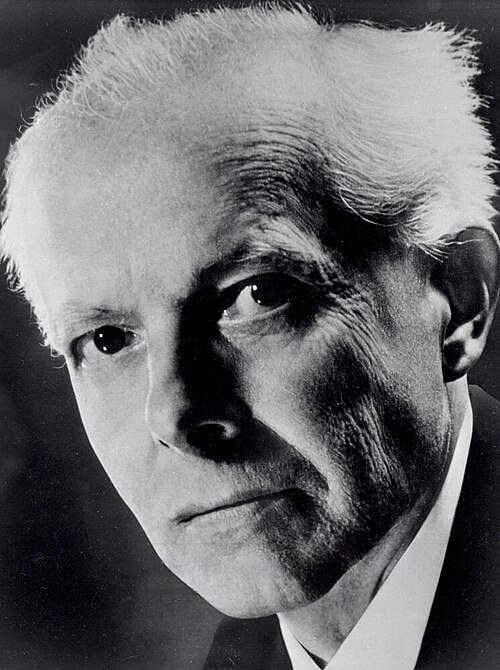
Composer
Béla Bartók
Hungarian composer and pianist (1881–1945)
1881–1945
533 works in the index
- Born
- 1881
- Died
- 1945
- Birthplace
- Sânnicolau Mare
- Citizenship / historical state
- United States
- Period (estimated from birth year)
- Modern
Biography
Much of the music that you hear in modern movies has its roots in the sonic landscapes that were pioneered by Béla Bartók. His inventive use of orchestration, harmony, structure and melody still sound fresh and exciting to this day. Born in Hungary in 1881, Bartók was largely considered to be a child prodigy. Bartók frequently remarked that his own melodies were like “imaginary folk tunes”; and as a result most of his compositions exhibit an air of otherworldliness.
Béla had an intense love of folk music, particularly Hungarian and eastern European folk music. He traveled incessantly for a number of years where he wrote very little. He spent those years recording and transcribing folk tunes with a wax-based recording device. Béla Bartók was a complete musician and composer, meaning he had very little interest in other activities outside of music. His concerto for orchestra is one of the most loved (by audiences and orchestras alike) and frequently performed pieces composed in the 20th century. Béla Bartók spent his last years in New York City where he wrote some of his most beloved compositions.
In this catalogue
- Common listed instruments
- Piano, violin, Organ, Clarinet, Orchestra
- Genres represented
- Classical, Dance, Folk
- Works with composition dates
- 53 of 533
These details describe the indexed sheet music, including arrangements.
Catalogue
Works page 2 of 12
Years are composition dates where known. Instruments describe editions in our catalogue and may include arrangements. A dash means the detail is not recorded.
| Work | Year composed | Catalogue / opus | Key in title | Listed instruments | Genre | Editions |
|---|---|---|---|---|---|---|
| Old Soldiers' Song | — | — | — | Piano | — | 5 |
| Wedding Dance | — | — | — | Piano | Classical | 5 |
| Canon [Sz. 42] | — | — | — | Piano | — | 5 |
| Dance In G | — | — | — | Piano | — | 5 |
| Stepping Stones [Op.101, No.7] Additional credits Ferdinand Beyer | — | Op.101, No.7 | — | Piano | — | 4 |
| Andante from for Children, Book 1 [No. 3] | — | — | — | Piano | — | 6 |
| Irish Tune from County Derry Additional credits Percy Aldridge Grainger | — | — | — | Piano | — | 5 |
| Piano Concerto No.2, Sz.95 | 1930-31IMSLP | — | — | — | Classical | 4 |
| 4 Piano Pieces DD71 | 1903IMSLP | — | — | Piano | — | 4 |
| String Quartet No. 1, Op.7 (Sz.40) | 1908-09IMSLP | Op.7 | — | String Quartet | — | 4 |
| 31. Canon | — | — | — | Piano, Saxophone | — | 4 |
| 38. Farewell (I look back upon you once more) | — | — | — | Piano | — | 5 |
| Joc cu Bata, Sz. 56, No. 1 | — | — | — | Piano | — | 3 |
| Bagatelle | — | — | — | Piano, Clarinet | — | 4 |
| Sewing Song | — | — | — | Piano | — | 5 |
| Love Song | — | — | — | Piano | — | 5 |
| Dance [Sz. 42/II/8] | — | — | — | Piano, Organ | — | 5 |
| Handkerchief Dance | — | — | — | Piano | — | 4 |
| The Village Maidens | — | — | — | Piano | — | 5 |
| Molto Vivace | — | — | — | Piano | Classical | 4 |
| Joc Cu Bâta | — | — | — | Piano | — | 4 |
| Bartók Suite (from For Children): 1st B | — | — | — | — | — | 4 |
| Bartók: Two Elegies, Op. 8B | — | Op. 8B | — | Piano | Classical | 4 |
| Bartók: Two Fantasies (Gmunden 1903) | — | — | — | Piano | — | 4 |
| Bartók: Two Roumanian Dances, Op. 8A | — | Op. 8A | — | Piano | Classical | 4 |
| Bartók Suite (from For Children): B | — | — | — | — | — | 4 |
| Bartók Suite (from For Children): E | — | — | — | — | — | 4 |
| Marcia funèbre | 1903IMSLP | — | — | Piano | Classical | 5 |
| 4 Dirges, Op.9a | 1910IMSLP | Op.9a | — | Piano | — | 3 |
| 44 Duos for 2 Violins, Sz. 98 | 1931IMSLP | — | — | — | — | 3 |
| 10 Easy Pieces Sz.39 | 1908IMSLP | — | — | Piano | — | 3 |
| Out of Doors (Szabadban), Sz.81 | 1926IMSLP | — | — | — | — | 3 |
| Rhapsody No.2 | 1928, revised 1944-45IMSLP | — | — | Piano, violin | — | 3 |
| 2 Romanian Dances, Op.8a | 1909-10IMSLP | Op.8a | — | Piano | — | 3 |
| String Quartet No. 2, Op.17 (Sz.67) | 1914-17IMSLP | Op.17 | — | — | — | 3 |
| String Quartet No.6, Sz.114 | 1939IMSLP | — | — | — | — | 3 |
| Suite No. 1, Op. 3 | 1905, rev. 1920IMSLP | Op. 3 | — | Piano, Harp, Organ, Cello, Flute, Oboe, violin, Bassoon, Double Bass, Horn, Clarinet, Timpani, percussion, Viola | — | 15 |
| Sonata for Clavier and Pedal, BWV 530. Piano solo. | 1730?IMSLP | BWV 530 | — | — | — | 3 |
| Violin Concerto No. 2 in B minor, Sz. 112 | 1937-38IMSLP | — | B minor | violin, Orchestra | Classical | 3 |
| The Bandit | — | — | — | Piano | — | 3 |
| Game (with two five-tone scales) | — | — | — | Piano | — | 5 |
| 39. Ballad (Janko drives out two oxen) | — | — | — | Piano, Clarinet | — | 5 |
| 11. Minuet | — | — | — | Piano | Classical | 5 |
| Study | — | — | — | Piano, Guitar | — | 3 |
| Three Short Contemporary Duets | — | — | — | Flute | — | 2 |
| Fantasy 1903 | — | — | — | Piano | — | 2 |
| Sketches, Op. 9 | — | Op. 9 | — | Piano | — | 3 |
| Where Have You Gone | — | — | — | Piano | — | 4 |
Biographical record: Wikidata, matched on name and checked against dates held in the catalogue. The period label is an estimate from birth year. Authority record: VIAF 291161938143739870009. Portrait: RIA Novosti, CC BY-SA 3.0, via Wikimedia Commons.