JustSheetMusic
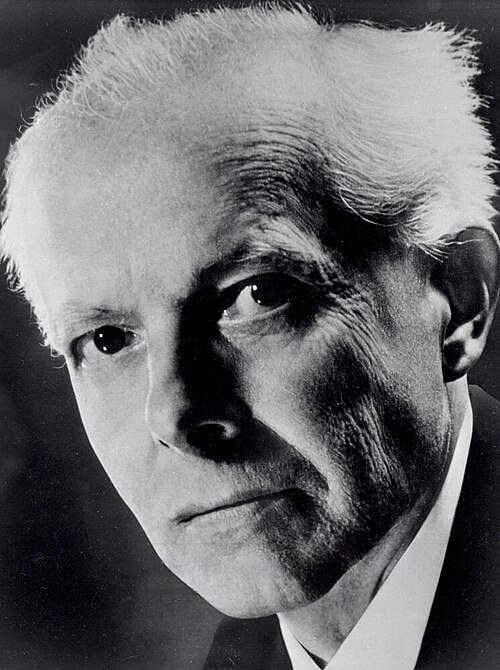
Portrait of Béla Bartók

Composer

Béla Bartók

Hungarian composer and pianist (1881–1945)

1881–1945

533 works in the index

Born
1881
Died
1945
Birthplace
Sânnicolau Mare
Citizenship / historical state
United States
Period (estimated from birth year)
Modern

Biography

Much of the music that you hear in modern movies has its roots in the sonic landscapes that were pioneered by Béla Bartók. His inventive use of orchestration, harmony, structure and melody still sound fresh and exciting to this day. Born in Hungary in 1881, Bartók was largely considered to be a child prodigy. Bartók frequently remarked that his own melodies were like “imaginary folk tunes”; and as a result most of his compositions exhibit an air of otherworldliness.

Béla had an intense love of folk music, particularly Hungarian and eastern European folk music. He traveled incessantly for a number of years where he wrote very little. He spent those years recording and transcribing folk tunes with a wax-based recording device. Béla Bartók was a complete musician and composer, meaning he had very little interest in other activities outside of music. His concerto for orchestra is one of the most loved (by audiences and orchestras alike) and frequently performed pieces composed in the 20th century. Béla Bartók spent his last years in New York City where he wrote some of his most beloved compositions.

In this catalogue

Common listed instruments
Piano, violin, Organ, Clarinet, Orchestra
Genres represented
Classical, Dance, Folk
Works with composition dates
53 of 533

These details describe the indexed sheet music, including arrangements.

Catalogue

Works page 7 of 12

Years are composition dates where known. Instruments describe editions in our catalogue and may include arrangements. A dash means the detail is not recorded.

Works and available sheet music details
WorkYear composedCatalogue / opusKey in titleListed instrumentsGenreEditions
Galop Additional credits Alfredo Casella — —— Piano— —
Gymnopédie No. 1 Additional credits Erik Satie — —— Piano— —
Song Of Spring — —— Piano— —
Left Hand Sings Additional credits Ludvig Schytte — —— Piano— —
Minuet Additional credits Johann Wilhelm Hässler — —— Piano— —
Temple Bells Additional credits Dennis Alexander — —— Piano— —
Tender Thoughts Additional credits Dennis Alexander — —— Piano— —
Zany Zebras Additional credits Dennis Alexander — —— Piano— —
Adagio Additional credits Daniel Steibelt — —— Piano— —
Kanzonette in C Major Additional credits Christian Gottlob Neefe — —C major Piano— —
Farewell Additional credits Dennis Alexander — —— Piano— —
Fuga Additional credits Johann Pachelbel — —— Piano— —
Le Rêve Interrompu Additional credits Dennis Alexander — —— Piano— —
Escapade Additional credits Alexander Tcherepnin — —— Piano— —
Frolics Additional credits Alexander Tcherepnin — —— Piano— —
Swineherd's Song — —— Piano— 1
Mirrors Additional credits Ross Lee Finney — —— Piano— —
Hungarian Song from for Children, Part 1 [No. 32] — —— Piano— —
Circle Dance from for Children, Book 1 [No. 8] — —— Piano— 1
Bagatelle [Op. 6, No. 4; Sz. 38:4] — Op. 6, No. 4— Piano— 1
Brâul — —— —— 15
Chorale Additional credits Carlisle Floyd — —— Piano— —
Clusters and Dots Additional credits Emma Lou Diemer — —— Piano— —
Columbine Dances - Waltz Additional credits Bohuslav Martinu — —— Piano— —
February 15 Additional credits André Previn — —— Piano— —
For Johnny Mehegan Additional credits Leonard Bernstein — —— Piano— —
Fourth Lyric Piece Additional credits Carlisle Floyd — —— Piano— —
A Giddy Girl Additional credits Jacques Ibert — —— Piano— —
Gigue Additional credits Emma Lou Diemer — —— Piano— —
Homage to Marya Freund and to the Harp Additional credits Virgil Thomson — —— Piano— —
In Evening Air Additional credits Aaron Copland — —— —— —
Jamaican Rumba Additional credits Arthur Benjamin — —— Piano— —
Kaleidoscopes, Nos. 9 and 10 Additional credits Benjamin Lees — —— Piano— —
La Piccadilly - Marche Additional credits Erik Satie — —— Piano— —
The Lake at Evening [Op. 5, No. 1] Additional credits Charles Tomlinson Griffes — Op. 5, No. 1— —— —
Medley Additional credits Ross Lee Finney — —— Piano— —
Evening in the Country from Ten Easy Pieces — —— —— —
Folk Song from For Children, Book 1 [No. 35] — —— Piano— 1
Jest from For Children, Book 1 [No. 27] — —— Piano— 1
Chromatic Invention 1 — —— —— —
Chromatic Invention 2 — —— —— —
Duet For Pipes — —— —— —
Bouree — —— —— —
Bulgarian Rhythm 1 — —— —— 9
Bulgarian Rhythm 2 — —— —— —
Intermezzo Op.1 No.2 [Borodin, Aljeksandr Porfirjevic] — Op.1 No.2— —— —
Theme And Inversion — —— —— —
Chromatic Invention 3 — —— —— —

Biographical record: Wikidata, matched on name and checked against dates held in the catalogue. The period label is an estimate from birth year. Authority record: VIAF 291161938143739870009. Portrait: RIA Novosti, CC BY-SA 3.0, via Wikimedia Commons.