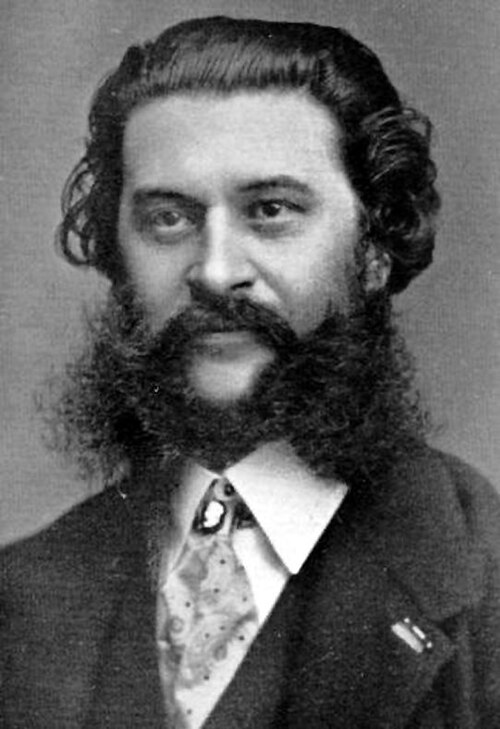
Composer
Johann Strauss II
830 works in the index
- Birthplace
- Sankt Ulrich
- Citizenship / historical state
- Cisleithania
- Period (estimated from birth year)
- Romantic
Biography
The waltz composer, and the catalogue is enormous because almost everything he wrote has been arranged for almost everything else. Over five hundred dance pieces, plus the operettas.
The Blue Danube and Tales from the Vienna Woods exist as orchestral scores, piano solos, piano duets, simplified teaching versions and arrangements for every ensemble that has ever asked. They are not interchangeable and the listing does not always distinguish them: a two-page "Blue Danube" is a fragment of a ten-minute piece.
The piano solo versions of the great waltzes are harder than they sound, because the orchestral texture has to be held by two hands. The four-hand arrangements are more idiomatic and, for two amateurs, considerably more fun.
In this catalogue
- Common listed instruments
- Piano, violin, Orchestra, Flute, Voice
- Genres represented
- Classical, Pop, pop, Children, New Age
- Works with composition dates
- 19 of 830
These details describe the indexed sheet music, including arrangements.
Catalogue
Works page 2 of 18
Years are composition dates where known. Instruments describe editions in our catalogue and may include arrangements. A dash means the detail is not recorded.
| Work | Year composed | Catalogue / opus | Key in title | Listed instruments | Genre | Editions |
|---|---|---|---|---|---|---|
| Concert Arabesques | — | — | — | Piano | Classical | 6 |
| Strauss: Waltzes, Volume I | — | — | — | Piano | — | 6 |
| Strauss: Waltzes, Volume II | — | — | — | Piano | — | 6 |
| Auf der Jagd, op. 373: Polka schnell | — | op. 373 | — | String Quartet | Classical | 5 |
| Im Krapfenwaldl, op. 336 | — | op. 336 | — | String Quartet | Classical | 5 |
| O schöner Mai!, Op.375 | — | Op.375 | — | Piano, Cello, violin | Classical | 5 |
| To part is such sweet sorrow | — | — | — | Choir | — | 4 |
| Oh, Eisenstein, you mastermind | — | — | — | Choir | — | 3 |
| Along the Silent Forest Path | — | — | — | Piano | — | 5 |
| Thousand and One Nights, A, Op.346 | — | Op.346 | — | Piano | — | 7 |
| Romance | — | — | — | Piano | — | 4 |
| Prelude, Op. 34, No 16 | — | Op. 34, No 16 | — | Piano | — | 4 |
| The Caissons Go Rolling Along (Gruber) | — | — | — | Piano | Classical | 5 |
| Thousand and One Nights Waltz from Op. 346 | — | Op. 346 | — | Guitar, Flute, violin, Bassoon, Clarinet, English Horn, Saxophone | — | 11 |
| The Radetzky March | — | — | — | Trumpet | — | 5 |
| Accelerations | — | — | — | — | — | 5 |
| Symphonia Domestica | 1902-03IMSLP | — | — | Flute | — | 5 |
| Gypsy Baron Waltz | — | — | — | Piano | Classical | 5 |
| Adele's Laughing Song | — | — | — | Voice | Classical | 5 |
| Radetsky March Full Score | — | — | — | — | — | 5 |
| Kaiser Waltz | — | — | — | — | Classical | 4 |
| Vergnügungszug, op. 281 | — | op. 281 | — | String Quartet | Classical | 5 |
| Die Fledermaus: Act I. "Täubchen, das entflattert ist" (Alfred) | — | — | — | — | Classical | 5 |
| Die Bajadere, Op.351 | — | Op.351 | — | — | Classical | 4 |
| Die Fledermaus | 1874Wikidata | — | — | — | Classical | 4 |
| Ich bin dir gut!, Op.455 | — | Op.455 | — | — | Classical | 4 |
| 's gibt nur a Kaiserstadt, 's gibt nur a Wien !, Op. 291 | 1864IMSLP | Op. 291 | — | — | Classical | 4 |
| Shawl-Polka, Op.343 | — | Op.343 | — | — | Classical | 4 |
| Laughing Song | — | — | — | Piano, Organ, Cello | Classical | 8 |
| Carnival in Rome Polka, Op.358 | — | Op.358 | — | Piano | — | 5 |
| Fledermaus-Quadrille, Die, Op.363 | — | Op.363 | — | Piano | — | 5 |
| Just A Closer Walk With Thee | — | — | — | Piano | — | 3 |
| The You're Welcome Polka, Op.372 | — | Op.372 | — | Piano | — | 5 |
| Prelude, Op. 11, No 4 | — | Op. 11, No 4 | — | Piano | — | 3 |
| Nymph Of The Danube (Op.327) | — | Op.327 | — | — | — | 4 |
| Till Eulenspiegel | — | — | — | Flute | — | 3 |
| Theme from Salome | — | — | — | Tuba | Classical | 4 |
| Radetzsky March | — | — | — | Piano | Classical | 6 |
| Wer uns getraut - from "Der Zigeunerbaron" - Piano | — | — | — | — | Classical | 2 |
| Persischer Marsch, op. 289 | — | op. 289 | — | Flute, Oboe, Horn, Clarinet, Trombone, Trumpet, Tuba, Saxophone, Tenor Saxophone | Classical | 4 |
| Die Fledermaus: Act II. "Klänge der Heimat" (Rosalinde) | — | — | — | — | Classical | 4 |
| Freuet Euch des Lebens, op. 340 | — | op. 340 | — | — | Classical | 4 |
| Die Fledermaus: Act I. "Komm mit mir zum Souper" (Falke, Eisenstein) | — | — | — | — | Classical | 4 |
| Neu Wien, op. 342 | — | op. 342 | — | — | Classical | 4 |
| Bitte schön, Op.372 | — | Op.372 | — | — | Classical | 3 |
| Cagliostro-Walzer, Op. 370 (from Cagliostro in Wien) | — | Op. 370 | — | — | Classical | 3 |
| Fledermaus-Quadrille, Op.363 | 1874IMSLP | Op.363 | — | — | Classical | 3 |
| Glücklich ist, wer vergi | — | — | — | — | Classical | 3 |
Biographical record: Wikidata, matched on name and checked against dates held in the catalogue. The period label is an estimate from birth year. The biography above is our own. Authority record: VIAF 274144783093263163101. Portrait: Fritz Luckhardt, Public domain, via Wikimedia Commons.