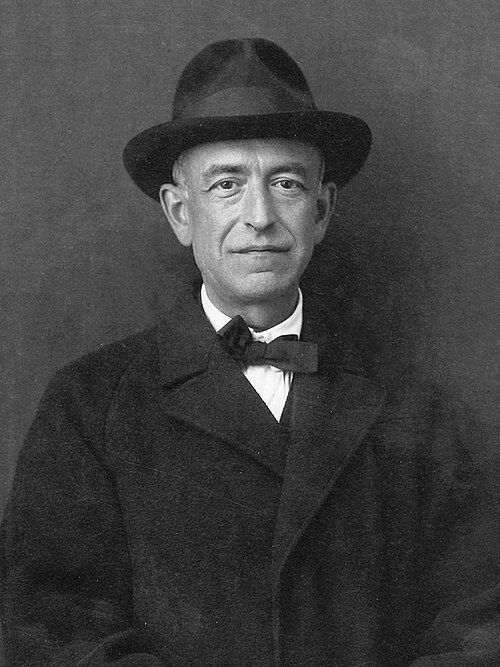
Composer
Manuel de Falla
Spanish composer (1876–1946)
1876–1946
152 works in the index
- Era
- Modern
- Nationality
- Spain
- Born in
- Cádiz
De Falla decided that music was his “definitive vocation” in 1893, under the immediate inspiration of a performance of the works of Edvard Grieg. In 1896 he moved to Madrid, and attended the Real Conservatorio de Música there. He developed his own theory of resonance, what one biographer calls “an enormously rich and complex system of harmonic superpositions,” and he became the outstanding figure of musical modernism in Spain. Among his best known works are “Wicked Love,” a ballet (1915); “Nights in the Gardens of Spain,” a nocturne for piano and orchestra (1916); and “The Three-Cornered Hat,” also a ballet (1917). He also composed “Harpsichord Concerto,” the first concerto created in the 20th century with the harpsichord specifically in mind, a work he composed under the influence of that instrument’s great advocate, Wanda Landowska. The Archivo Manuel de Falla, created in March 1991, may be found in Granada: it has become the Mecca for all serious researchers into his life and work.
Catalogue
Works page 4 of 4
Ritual Fire Dance (From El Amor Brujo): 1st Percussion
Ritual Fire Dance (From El Amor Brujo): 2nd Percussion
Ritual Fire Dance (From El Amor Brujo): Timpani
Ritual Fire Dance (From El Amor Brujo): Score
Danza del Molinero, El Circulo Magico, Danza Ritual del Fuego
El pa–o moruno
Canci—n
Ritual Fire Dance (El Amor Brujo)
Dates, era and nationality from Wikidata, matched on name and verified against any dates already held here. Portrait: Archivo Manuel de Falla, Public domain, via Wikimedia Commons.