Composer
Aaron Copland
American composer, composition teacher, writer, and conductor (1900-1990)
1900–1990
152 works in the index
- Era
- Modern
- Nationality
- United States
- Born in
- Brooklyn
Aaron Copland (November 14, 1900 â December 2, 1990) was an American classical composer, as well as a conductor, teacher, and writer. Throughout his influential career he garnered a number of prestigious awards and is credited with creating a distinctively American style of classical composition. His energetic support of American classical music and his mentoring of young composers earned him the nickname âthe Dean of American Composersâ.
Copland was born on the 14 November, 1900, in Brooklyn, New York, to a family of Lithuanian Jewish descent. In his youth he studied music under noted American composer Rubin Goldmark, before moving to Paris to study at the Fontainebleau School of Music. After composing a number of pieces influenced by contemporary jazz, Copland had his first significant success with the 1939 ballet Billy the Kid. The ballet was among the first to showcase American music and dance styles, and Copland succeeded it with two further successful ballets, Rodeo (1942) and Appalachian Spring (1944), the latter of which won the Pulitzer Prize in composition.
During this period, Copland also composed several pieces that have become American patriotic standards, most noticeably Fanfare for the Common Man (1942). In 1946 he finished his Third Symphony, which has since become the most performed and recorded symphony of the American 20th century. Underlining his compositional flexibility, Copland also composed scores for a number of major films, winning the Academy Award for Best Music for The Heiress (1950), and created the music for the renowned American opera The Tender Land (1954).
In his later life, Copland focused his energy on conducting and teaching. In 1964 he was presented with the Presidential Medal of Freedom by President Lyndon Johnson. He died of Alzheimerâs disease and respiratory failure in North Tarrytown, New York, on the 2 December, 1990.
Catalogue
Works page 4 of 4
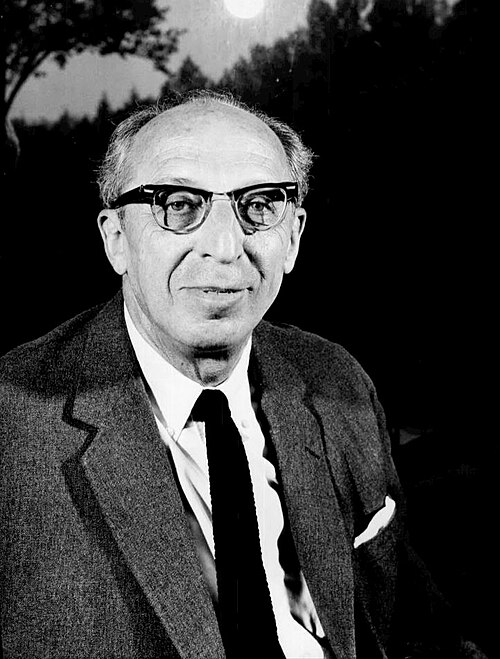
Dates, era and nationality from Wikidata, matched on name and verified against any dates already held here. Portrait: CBS Television, Public domain, via Wikimedia Commons.